Automatic Doors and Storefront Security: What Property Owners Should Know
Automatic doors and storefront security hardware are essential components of commercial property protection. This guide provides a comprehensive overview of automatic door systems, storefront security hardware, sensors, maintenance considerations, and what property owners should know about these systems.
What Are Automatic Doors?
Automatic doors are doors that open and close without manual operation. They use sensors, motors, and control systems to detect approaching people and open the door automatically, then close it after the person passes through.
Automatic doors serve several purposes:
- Convenience — Hands-free entry for customers, especially those carrying items
- Accessibility — ADA compliance for wheelchair users and people with mobility limitations
- Energy efficiency — Minimize open time to reduce HVAC loss
- Traffic flow — Manage high-traffic entrances efficiently
- Security — Can be integrated with access control and locking systems
Types of Automatic Doors
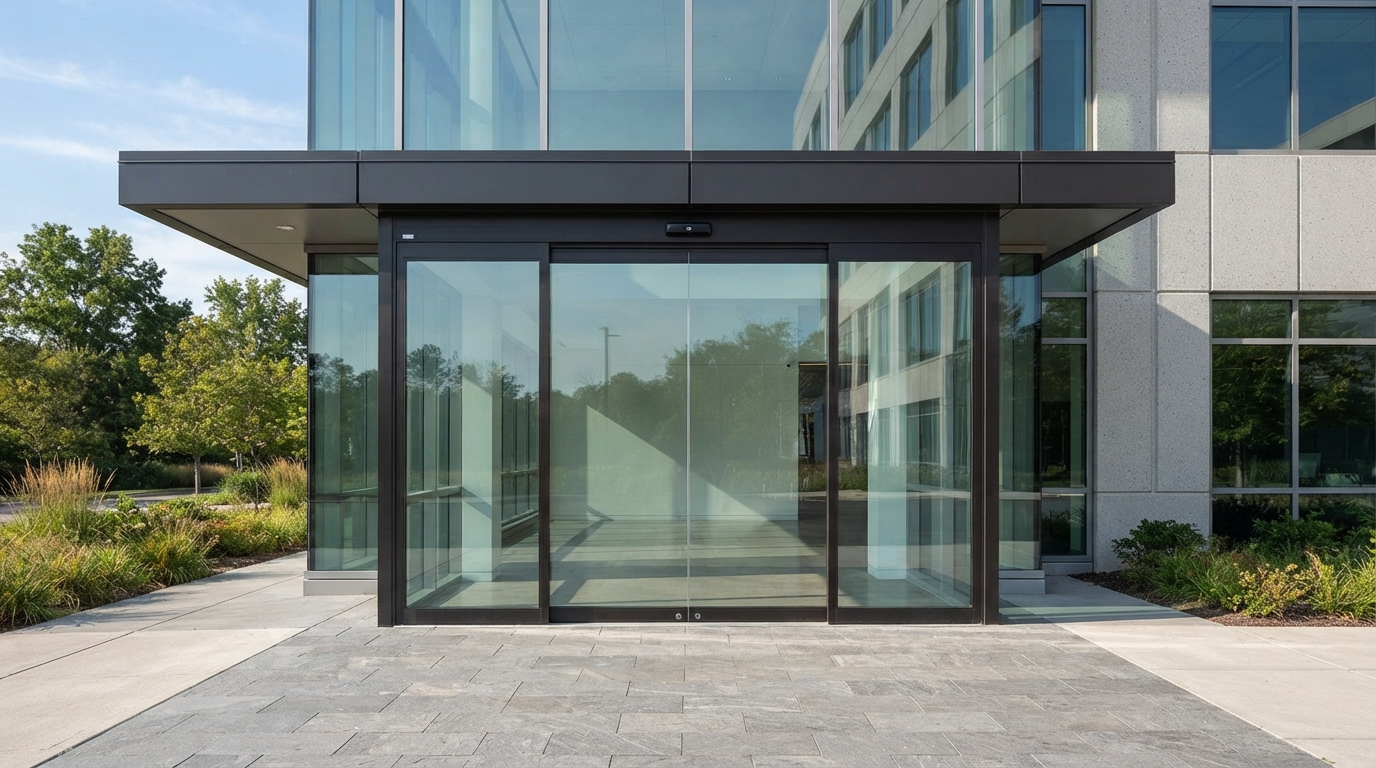
#### Sliding Automatic Doors
Sliding doors are the most common automatic door type for commercial entrances:
How they work:- Door panels slide horizontally on a track
- Sensors detect approaching people
- The drive mechanism opens the panels
- After a timed delay, the doors close automatically
- Single-slide — One moving panel and one fixed panel
- Bi-parting — Two moving panels that open from the center
- Telescopic — Multiple panels that stack for wider openings
- Retail storefronts
- Office building entrances
- Healthcare facilities
- Hotels and hospitality
#### Swinging Automatic Doors
Swinging doors open by rotating on hinges:
How they work:- Sensors detect approaching people
- The operator mechanism swings the door open
- After a timed delay, the door closes automatically
- Single swing — One door panel
- Double swing — Two door panels
- Direction — Inward or outward opening
- Interior doors
- Entrances with limited space
- Historic buildings where sliding doors aren't appropriate
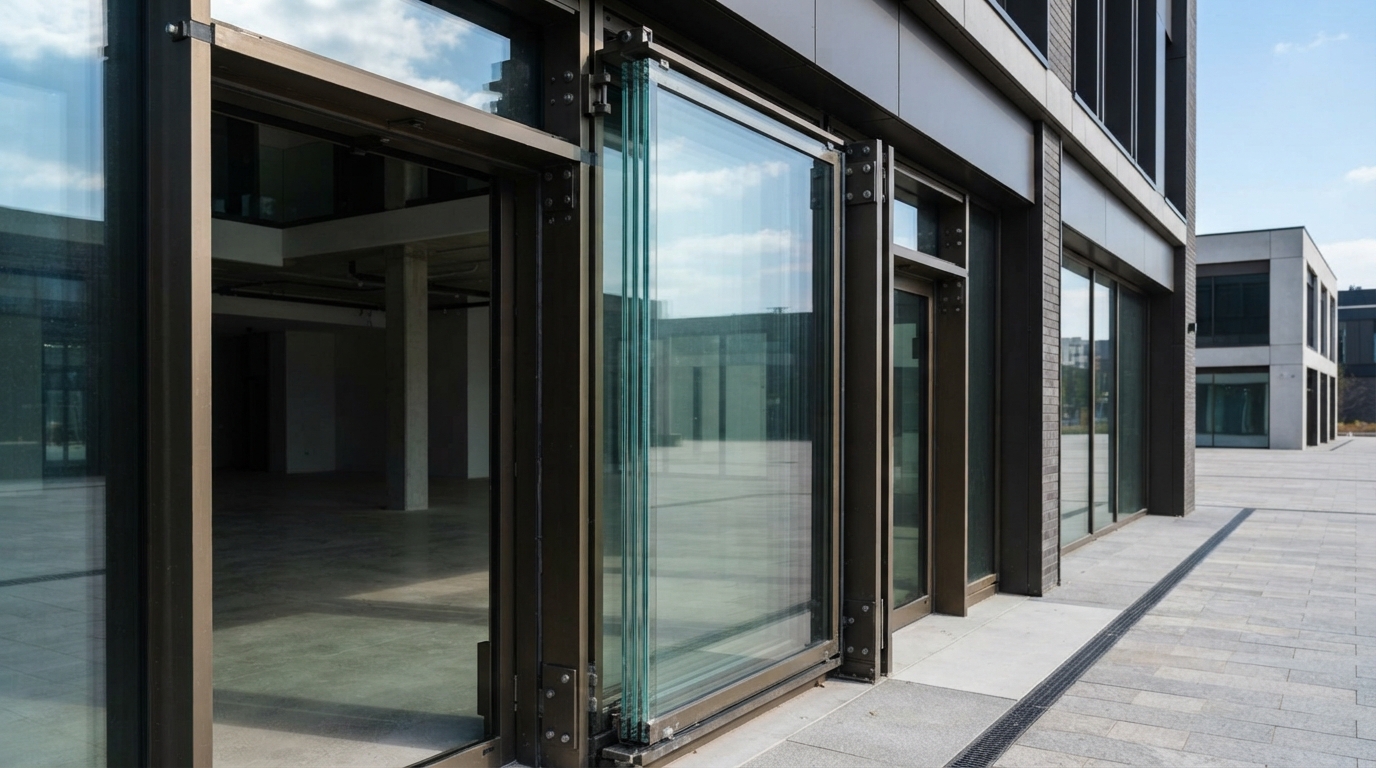
#### Folding Automatic Doors
Folding doors have panels that fold against each other:
How they work:- Multiple panels connected by hinges
- Panels fold to one or both sides when opened
- Sensors trigger the folding mechanism
- Wide openings
- Retail entrances
- Spaces where door panels need to be minimized when open
#### Revolving Doors
Revolving doors have panels that rotate around a central axis:
How they work:- Typically 3 or 4 panels rotating around a central hub
- Rotate automatically when a person pushes or when sensors detect approach
- Always maintain a seal, minimizing air exchange
- Excellent energy efficiency (minimal air exchange)
- High traffic capacity
- Prevents drafts
- Can be integrated with access control
- Large office buildings
- Hotels
- Department stores
- High-traffic entrances
#### Automatic Door Operators for Manual Doors
Existing manual doors can be retrofitted with automatic operators:
- Surface-mounted operators — Mounted on the door header
- Concealed operators — Hidden in the door frame
- Low-energy operators — Slower opening for accessibility compliance
These allow manual doors to function automatically when needed while maintaining manual operation capability.
Automatic Door Sensors
Sensors are critical to automatic door operation—they detect people and trigger the door to open:
#### Motion Sensors
Motion sensors detect movement near the door:
Microwave sensors:- Emit microwave signals and detect movement through Doppler effect
- Detect motion through glass and some materials
- Fast detection
- Can be affected by moving objects outside the detection zone
- Detect changes in infrared radiation (heat) from moving objects
- More precise detection zones
- Less susceptible to false triggers from outside the zone
- Can be combined with microwave for dual-technology sensors
#### Presence Sensors
Presence sensors detect people standing in the door area:
Active infrared presence sensors:- Emit infrared beams and detect reflections
- Detect stationary people (not just movement)
- Critical for safety—prevent doors from closing on people
- Multiple beams create a detection curtain
- Floor mats that detect weight
- Older technology, less common in modern installations
- Can be used as backup or supplementary sensors
#### Combination Sensors
Modern automatic doors often use combination sensors:
- Motion + presence — Motion sensor for approach detection, presence sensor for safety
- Dual-technology — Microwave + infrared for reliable detection
- Redundancy — Multiple sensors for fail-safe operation
#### Sensor Safety Features
Sensors provide critical safety functions:
- Opening safety — Prevent the door from opening if someone is in the swing path
- Closing safety — Prevent the door from closing on someone in the doorway
- Hold-open — Keep the door open as long as someone is in the doorway
- Emergency release — Detect obstacles and reverse door direction
Storefront Security Hardware
In addition to automatic doors, storefront security involves several hardware components:
#### Storefront Locks
Storefront doors typically use specific lock types:
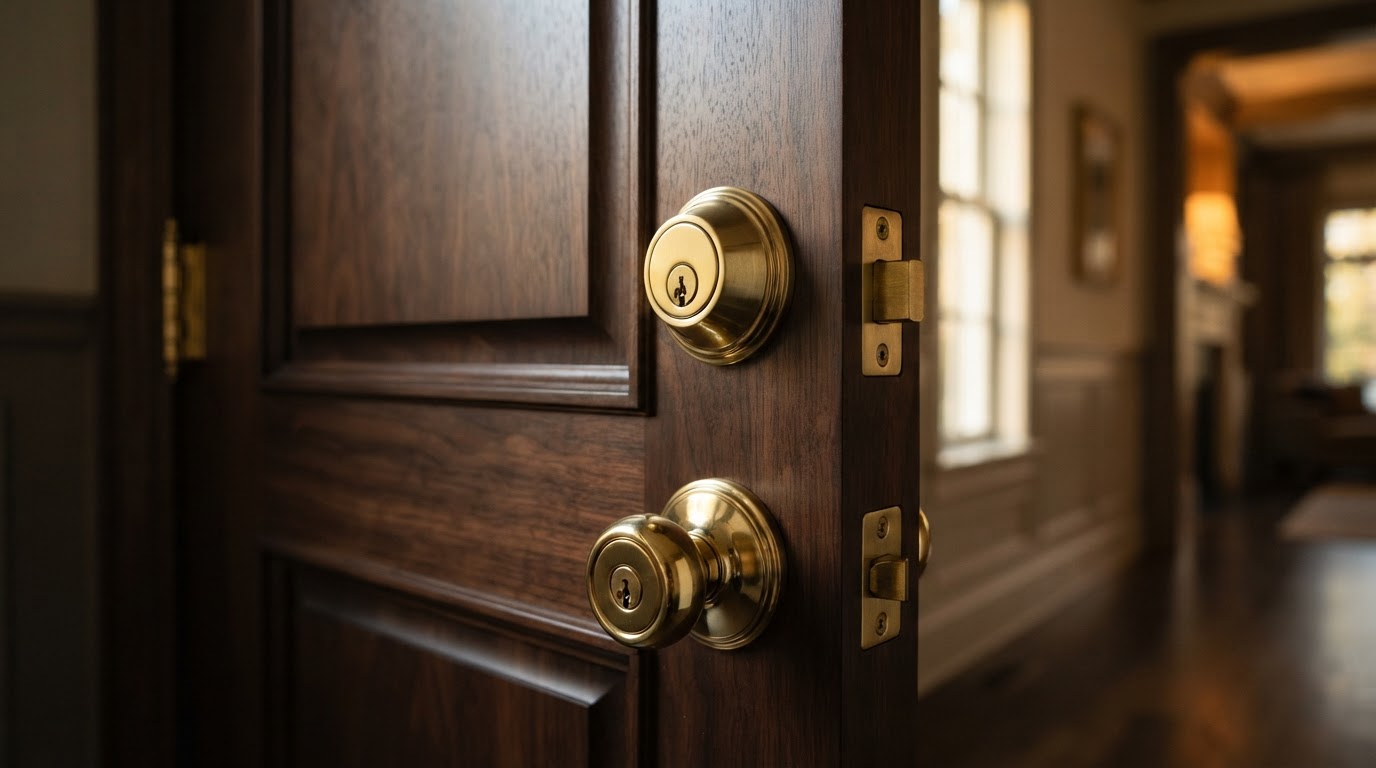
- Cylinder rim locks — Surface-mounted locks with a cylinder
- Mortise locks — Installed in a mortise pocket in the door
- Vertical rod exit devices — Secure double doors at top and bottom
- Aluminum storefront hardware — Specialized hardware for aluminum frame doors
#### Storefront Door Hardware
- Door closers — Ensure doors close and latch properly
- Hinges — Heavy-duty hinges for commercial doors
- Sweeps and weatherstripping — Seal gaps for energy efficiency and weather protection
- Kick plates — Protect the door from damage
- Push/pull handles — For manual operation
#### After-Hours Security
After business hours, storefronts need additional security:
- Locking mechanisms — Deadbolts, rim locks, or exit devices with cylinder locking
- Security gates — Folding or rolling gates that cover the storefront
- Rolling shutters — Aluminum shutters that roll down over the storefront
- Security film — Applied to glass for break-in resistance
- Alarm contacts — Door and window contacts for the alarm system
- Camera coverage — Cameras monitoring the storefront
#### Glass Protection
Storefront glass is vulnerable to break-ins:
- Laminated glass — Holds together when broken
- Security film — Retrofit option for existing glass
- Polycarbonate panels — For high-risk applications
- Window bars — Physical barrier (check local codes for restrictions)
Integration with Access Control
Automatic doors can be integrated with access control systems:
#### Access Control Integration
- Card readers — Installed near automatic doors for credential-based access
- Electric strikes or maglocks — Electrified hardware that releases when access is granted
- Timed access — Doors unlock automatically during business hours, lock after hours
- Remote release — Doors can be unlocked from a security desk or remote location
#### After-Hours Locking
After business hours:
- Automatic locking — The access control system locks all doors at a scheduled time
- Credential-only access — After-hours entry requires a credential
- Alarm arming — The alarm system arms when the last person leaves
- Camera recording — Cameras record any after-hours access
#### Emergency Release
All electrified doors must allow emergency egress:
- Fail-safe operation — On power loss, doors unlock for egress
- Fire alarm integration — Fire alarm releases all locks
- Manual release — Push bars or panic hardware for manual egress
- Emergency signage — Clear exit signage
ADA Compliance for Automatic Doors
The Americans with Disabilities Act (ADA) sets requirements for door accessibility:
#### Door Opening Force
- Manual doors — Maximum 5 lbs opening force for interior doors, 8.5 lbs for exterior
- Automatic doors — Must open with minimal effort (sensor-activated)
#### Door Width
- Minimum clear width — 32 inches for wheelchair access
- Automatic doors — Typically wider to accommodate all users
#### Door Speed
- Opening speed — Must be slow enough to be safe but fast enough for convenience
- Closing speed — Must be slow enough to allow safe passage (typically 6-8 seconds)
#### Safety Requirements
- Sensors — Must prevent doors from closing on people
- Hold-open — Must stay open long enough for safe passage
- Manual operation — Must be operable manually in case of sensor failure
Maintenance and Inspection
Automatic doors require regular maintenance to ensure safe and reliable operation:
#### Routine Inspection
Daily or weekly visual inspections:
- Door operation — Do the doors open and close smoothly?
- Sensor function — Do the sensors detect people properly?
- Unusual noises — Grinding, squeaking, or unusual sounds
- Door alignment — Are the doors properly aligned in the track?
- Weather seals — Are the seals intact?
#### Professional Maintenance
Periodic professional maintenance includes:
- Sensor testing — Verify all sensors function correctly
- Drive mechanism inspection — Check motor, belt, and drive components
- Track cleaning and lubrication — Clean and lubricate the door track
- Hardware tightening — Tighten loose hardware
- Control system check — Verify the control system functions correctly
- Safety system test — Test all safety features (reversing, hold-open, etc.)
#### Common Issues
- Slow operation — May indicate drive mechanism wear or control adjustment needed
- Sensor problems — Doors not opening or opening randomly
- Door misalignment — Doors rubbing or not closing properly
- Unusual noises — Grinding or squeaking from drive mechanism
- Incomplete closing — Doors not fully closing or latching
Code Compliance
Automatic doors must comply with several codes:
#### ANSI/BHMA A156.10 — Standard for Power-Operated Pedestrian Doors
This standard covers:
- Safety requirements — Sensor performance, safety features
- Installation requirements — Proper installation procedures
- Testing requirements — Performance testing after installation
- Maintenance requirements — Ongoing maintenance standards
#### ANSI/BHMA A156.19 — Standard for Low-Energy Power-Operated Doors
Covers low-energy operators (typically used for accessibility retrofits):
- Slower opening speed — Reduced opening force
- Activation requirements — Push plate or sensor activation
- Safety requirements — Appropriate for low-energy operation
#### Local Building Codes
Miami-Dade and Broward counties may have additional requirements:
- Wind load requirements — Doors must resist wind loads
- Impact requirements — Glazing must meet impact resistance standards
- Fire codes — Fire door requirements for certain applications
- ADA compliance — Accessibility requirements
Factors Affecting Cost
Automatic door costs vary based on:
- Door type — Sliding, swinging, folding, or revolving
- Size — Larger doors cost more
- Sensor type — More advanced sensors cost more
- Integration — Access control integration adds cost
- Brand and quality — Higher-quality systems cost more
- Installation — Professional installation labor
- Code compliance — Impact-rated and fire-rated doors may cost more
- Maintenance — Ongoing maintenance contracts
All costs are presented for approval before authorized work begins.
Planning an Automatic Door Installation
#### 1. Needs Assessment
- Traffic volume — How many people use the entrance?
- Accessibility requirements — ADA compliance needs
- Security requirements — Access control and after-hours security
- Energy considerations — HVAC loss through the entrance
- Aesthetic requirements — Design and appearance
#### 2. Door Selection
- Door type — Sliding, swinging, or folding based on space and traffic
- Size — Appropriate width for traffic and accessibility
- Sensor type — Motion, presence, or combination
- Integration — Access control, alarm, and camera integration
#### 3. Proposal and Approval
A detailed proposal with scope and pricing is presented for approval.
#### 4. Installation
Professional installation includes:
- Door installation — Mounting the door and drive mechanism
- Sensor installation — Installing and configuring sensors
- Control system — Installing and programming the control system
- Integration — Connecting to access control, alarm, and camera systems
- Testing — End-to-end testing of all functions
#### 5. Training and Handover
Building staff receive training on:
- Daily operation — How the doors function
- Basic troubleshooting — Common issues and solutions
- Emergency procedures — What to do if doors malfunction
- Maintenance — Routine inspection tasks
Conclusion
Automatic doors and storefront security hardware are essential for commercial properties, providing convenience, accessibility, and security. Understanding the types, sensors, integration options, and maintenance requirements helps property owners make informed decisions. Professional installation and regular maintenance ensure safe, reliable operation.
Contact D'Alembert Locksmith to discuss automatic door and storefront security options, current availability, and suitable service options for your property.