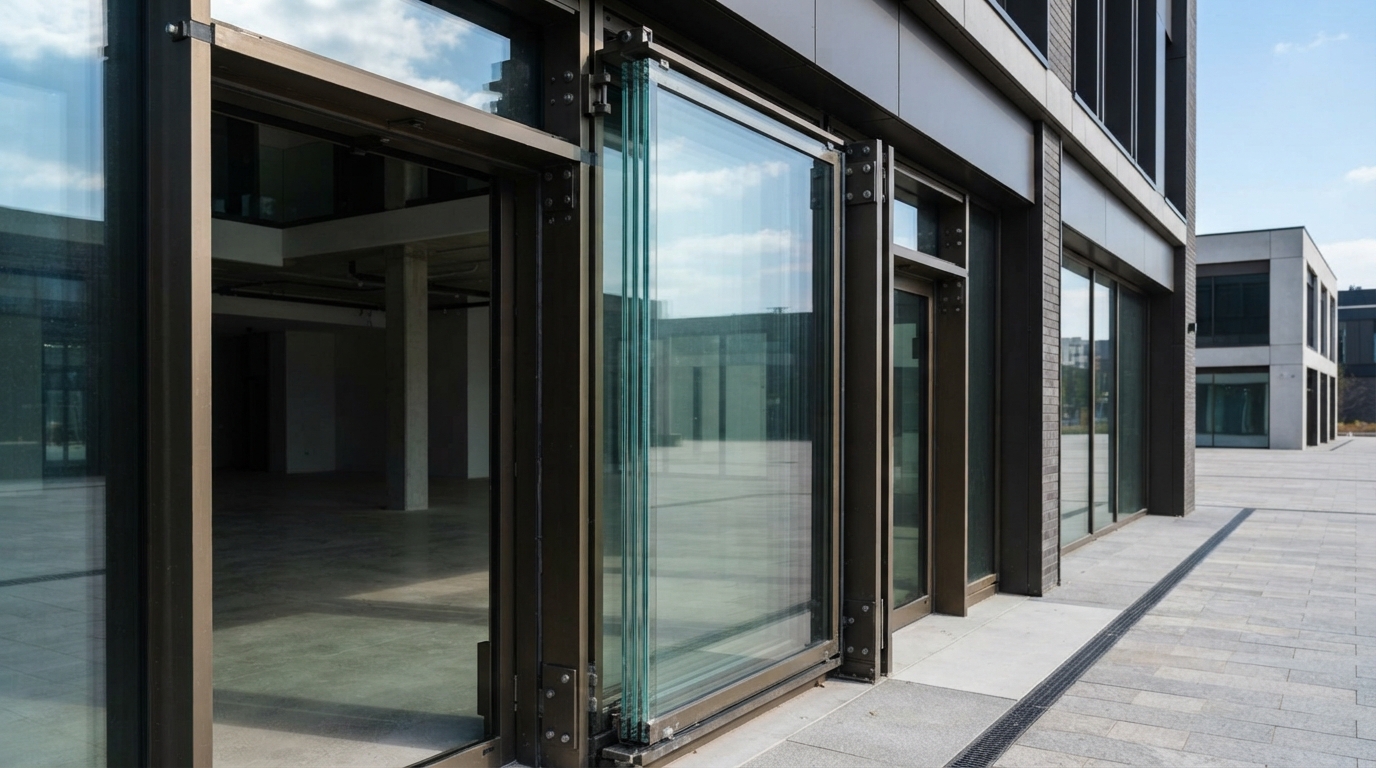
Security Glass and Glazing: A Property Protection Guide
Security glass and architectural glazing play a critical role in property protection, providing a transparent barrier that resists forced entry while maintaining visibility and natural light. This guide explains security glass options, laminated glazing, impact resistance, and how architectural glazing contributes to comprehensive property protection.
What Is Security Glass?
Security glass is glazing designed to resist forced entry, impact, and in some cases ballistic or blast threats. Unlike standard glass, which shatters easily and provides minimal resistance to forced entry, security glass is engineered to hold together when broken, making it significantly more difficult to penetrate.
Security glass achieves its protective properties through:
- Laminated construction — Multiple layers of glass bonded with interlayers
- Tempered layers — Heat-treated glass for additional strength
- Specialized interlayers — Polycarbonate or specialized films that resist penetration
- Multi-ply construction — Multiple glass and interlayer combinations for increased protection
Types of Security Glass
#### Laminated Glass
Laminated glass is the most common type of security glass. It consists of two or more layers of glass bonded together with an interlayer—typically polyvinyl butyral (PVB) or ethylene-vinyl acetate (EVA):
Construction:- Glass layer + interlayer + glass layer (minimum)
- Additional layers for higher security ratings
- Interlayer thickness varies (0.030" to 0.090" or more)
When laminated glass is struck, the glass layers may crack, but the interlayer holds the pieces together. This prevents the glass from falling out of the frame and creates a barrier that is difficult to penetrate. An intruder would need to make repeated, forceful strikes to create an opening large enough to enter.
Benefits:- Holds together when broken
- Resists forced entry
- Reduces injury from broken glass
- Blocks UV radiation (depending on interlayer)
- Available in various thicknesses for different security levels
- Storefront windows
- Entry doors with glass
- Ground-floor windows
- Display cases
- Windshield-type applications
#### Tempered Glass
Tempered glass is heat-treated to increase its strength:
Construction:- Glass is heated to approximately 1,150°F and then rapidly cooled
- This process creates surface compression and edge tension
- Result is glass that is 4-5 times stronger than annealed glass
Tempered glass is harder to break than standard glass. When it does break, it shatters into small, relatively harmless pieces rather than sharp shards.
Benefits:- Stronger than standard glass
- Breaks into small, safe pieces
- Resists thermal stress
- Meets safety glazing requirements
- When broken, it provides no barrier (unlike laminated glass)
- Not a security glass by itself, but can be combined with laminated construction
- Side and rear vehicle windows
- Shower doors
- Glass doors
- Safety glazing locations required by code
#### Laminated-Tempered Combinations
For maximum security, laminated and tempered glass can be combined:
- Tempered outer layer — Provides strength and resistance to impact
- Laminated inner layer — Holds together if the outer layer breaks
- Multiple layers — Additional layers for higher security ratings
These combinations provide both strength and the "hold-together" property of laminated glass.
#### Polycarbonate Glazing
Polycarbonate (e.g., Lexan, Makrolon) is a transparent plastic that is much stronger than glass:
Benefits:- 250 times more impact-resistant than glass
- Lightweight
- Can be formed into curved shapes
- Available in various thicknesses
- Scratches more easily than glass
- Can yellow over time with UV exposure
- May not meet fire codes for all applications
- Aesthetic differences from glass
- High-security glazing
- Riot protection
- Bullet-resistant applications
- Areas where impact resistance is paramount
#### Security Window Film
Security film is a retrofit option for existing glass:
Construction:- A thick, transparent polyester film applied to existing glass
- Bonds to the glass surface with adhesive
- Available in thicknesses from 4 mil to 15+ mil
When the glass breaks, the film holds the broken pieces together, similar to laminated glass. The film makes it difficult to penetrate the opening.
Benefits:- Can be applied to existing glass
- Less expensive than glass replacement
- Provides similar protection to laminated glass
- Also provides UV protection and some energy benefits
- Not as effective as true laminated glass
- Film can peel or degrade over time
- Installation quality affects performance
- May not meet all code requirements
- Retrofitting existing windows
- Budget-conscious security upgrades
- Temporary security measures
- Additional layer over existing security glass
Security Glass Ratings and Standards
#### UL 972 — Standard for Burglary-Resisting Glazing
Underwriters Laboratories UL 972 tests glazing for resistance to burglary attempts:
- Impact testing — Glass is struck with various objects to simulate forced entry
- Repeated impacts — Multiple strikes at the same location
- Penetration resistance — How long the glass resists creating an opening
Glass that meets UL 972 has demonstrated resistance to forced entry attempts.
#### ASTM F1233 — Standard Test Method for Security Glazing
ASTM F1233 provides a comprehensive testing methodology for security glazing:
- Forced entry resistance — Resistance to various attack methods
- Ballistic resistance — Resistance to bullets (for ballistic-rated glass)
- Blast resistance — Resistance to explosive forces
- Classification — Levels of protection based on test performance
#### Miami-Dade NOA (Notice of Acceptance)
For Miami-Dade County, glazing must meet specific wind-borne debris requirements:
- Large missile impact — Glazing must resist impact from a 2x4 traveling at 50 fps (for first 30 feet of building height)
- Small missile impact — Glazing must resist impact from steel balls traveling at 130 fps (for above 30 feet)
- Cyclic pressure — After impact, glazing must withstand cyclic pressure to simulate hurricane conditions
Products that meet these requirements receive a Miami-Dade Notice of Acceptance (NOA), which is required for building code compliance in wind-borne debris regions.
Impact Resistance and Hurricane Protection
In South Florida, impact resistance is not just a security feature—it's a building code requirement. Miami-Dade and Broward counties are in wind-borne debris regions, meaning buildings must have openings (windows, doors) that resist impact from flying debris during hurricanes.
#### Impact-Resistant Glass
Impact-resistant glass is designed to:
- Resist missile impact — Large missile (2x4) for lower levels, small missile (steel balls) for upper levels
- Remain in the opening — Even if cracked, the glass must stay in the frame
- Withstand cyclic pressure — After impact, the glass must resist alternating positive and negative pressures
Impact-resistant glass typically uses laminated construction with a special interlayer that maintains the opening's integrity even when the glass is cracked.
#### Dual-Purpose: Security and Storm Protection
Impact-resistant glass provides dual-purpose protection:
- Hurricane protection — Resists wind-borne debris
- Security protection — Resists forced entry attempts
- Forced entry resistance — The same properties that resist hurricane debris also resist break-in attempts
This makes impact-resistant glass a valuable investment for Miami properties—it provides both code-required storm protection and enhanced security.
Applications for Security Glass
#### Storefront Windows
Storefronts are common targets for break-ins. Security glass protects by:
- Resisting smash-and-grab attempts
- Holding together when struck, preventing quick entry
- Providing a visible deterrent (thicker, more substantial glass)
- Maintaining display visibility
For storefronts, laminated glass or laminated-tempered combinations are typically recommended.
#### Entry Doors with Glass
Doors with glass panels are vulnerable points. Security glass:
- Resists break-and-reach attempts (breaking glass to unlock the door)
- Prevents entry through broken glass panels
- Maintains the aesthetic of glass doors while providing security
For entry doors, laminated glass is recommended for glass panels adjacent to locks.
#### Ground-Floor Windows
Ground-floor windows are accessible entry points. Security glass:
- Resists break-in attempts
- Provides impact resistance for hurricane protection
- Maintains natural light and visibility
- Can be combined with window locks for layered security
#### Display Cases
Retail display cases containing valuables benefit from security glass:
- Resists smash-and-grab attempts
- Protects displayed merchandise
- Maintains display visibility
- Can be combined with locking mechanisms
#### Interior Security Applications
Security glass can be used for interior applications:
- Pharmacy windows — Protecting controlled substances
- Cash offices — Protecting cash handling areas
- Evidence rooms — Protecting law enforcement evidence
- Server rooms — Protecting IT infrastructure
- Security checkpoints — Providing visibility with protection
Installation Considerations
#### Frame Compatibility
Security glass is only as effective as its frame:
- Frame strength — The frame must be strong enough to hold the glass in place during an attack
- Glazing method — The glass must be properly glazed (secured) in the frame
- Frame material — Aluminum, steel, or reinforced frames may be needed
- Existing frames — May need reinforcement or replacement to support security glass
Installing security glass in a weak frame provides a false sense of security—the glass may resist breaking, but the frame can be forced.
#### Glass Thickness and Weight
Security glass is thicker and heavier than standard glass:
- Laminated glass — Typically 1/4" to 3/4" or more for security applications
- Weight — Heavier glass requires stronger frames and hardware
- Existing openings — May need modification to accommodate thicker glass
- Door hardware — May need adjustment for the additional weight
#### Installation Quality
Proper installation is critical:
- Professional installation — Security glass should be installed by professionals familiar with security glazing
- Proper glazing — The glass must be properly secured in the frame
- Seal integrity — Weather seals must be properly installed
- Frame preparation — Frames may need modification or reinforcement
Retrofit vs. New Installation
#### Retrofitting Existing Glass
For existing buildings, security glass can be retrofitted:
- Glass replacement — Replace existing glass with security glass
- Security film — Apply security film to existing glass
- Frame reinforcement — Reinforce existing frames as needed
- Window guards — Add physical barriers (bars, screens) in addition to security glass
Retrofitting is less expensive than new construction but may be limited by existing frame conditions.
#### New Construction
For new construction, security glass can be specified from the start:
- Proper frame design — Frames designed to support security glass
- Appropriate glass thickness — Specified for the security level needed
- Integration with other security — Coordinated with locks, access control, and alarm systems
- Code compliance — Ensure all glazing meets building and fire codes
Factors Affecting Cost
Security glass costs vary based on:
- Glass type — Laminated, tempered, or combination
- Glass thickness — Thicker glass costs more
- Size and quantity — Larger and more panels cost more
- Frame requirements — Frame reinforcement or replacement
- Installation — Professional installation labor
- Code requirements — Impact-rated glass may cost more
- Brand and quality — Higher-quality glass costs more
All costs are presented for approval before authorized work begins.
Maintenance and Care
Security glass requires minimal maintenance:
- Cleaning — Clean with standard glass cleaners (avoid abrasive cleaners)
- Inspection — Periodically inspect for cracks, chips, or delamination
- Seal inspection — Check weather seals for integrity
- Frame inspection — Check frames for damage or corrosion
If security glass is cracked, it should be replaced promptly. While laminated glass holds together when cracked, its security properties are reduced.
Conclusion
Security glass and glazing provide a critical layer of property protection—resisting forced entry, providing hurricane protection, and maintaining visibility and natural light. Understanding the types, ratings, and applications helps property owners make informed decisions about this important security component. Professional assessment and installation ensure security glass performs as intended.
Contact D'Alembert Locksmith to discuss security glass and glazing options, current availability, and suitable service options for your property.