Car Key Fob Replacement: What You Need to Know
Key fobs have become standard equipment on modern vehicles, providing remote lock, unlock, trunk release, and sometimes push-button start functionality. When a fob is lost, damaged, or stops working, replacement involves more than simply buying a new remote. This guide explains the key fob replacement process, compatibility considerations, and what to discuss before authorizing replacement work.
What Is a Key Fob?
A key fob is a small electronic device that controls vehicle functions remotely. Depending on the vehicle, a fob may include:
- Remote lock/unlock — Buttons to lock and unlock the doors from a distance
- Trunk/hatch release — A button to open the trunk or liftgate
- Panic button — Activates the vehicle's alarm to attract attention
- Remote start — Starts the engine from a distance (on equipped vehicles)
- Window control — Open or close windows remotely (on some models)
- Proximity entry — Unlocks doors when the fob is near the vehicle (smart keys)
- Push-button start — Allows engine start when the fob is inside the vehicle (smart keys)
Key fobs come in several configurations:
#### Standalone Remote Fobs
These fobs are separate from the physical key. They contain remote control electronics but do not contain a transponder chip or key blade. The vehicle is started with a separate transponder key.
#### Integrated Transponder Key Fobs
These combine a transponder key with remote control electronics in a single unit. The key blade folds out or is fixed, and the remote buttons are on the fob body. This is common on many mid-2000s to 2010s vehicles.
#### Smart Keys (Proximity Fobs)
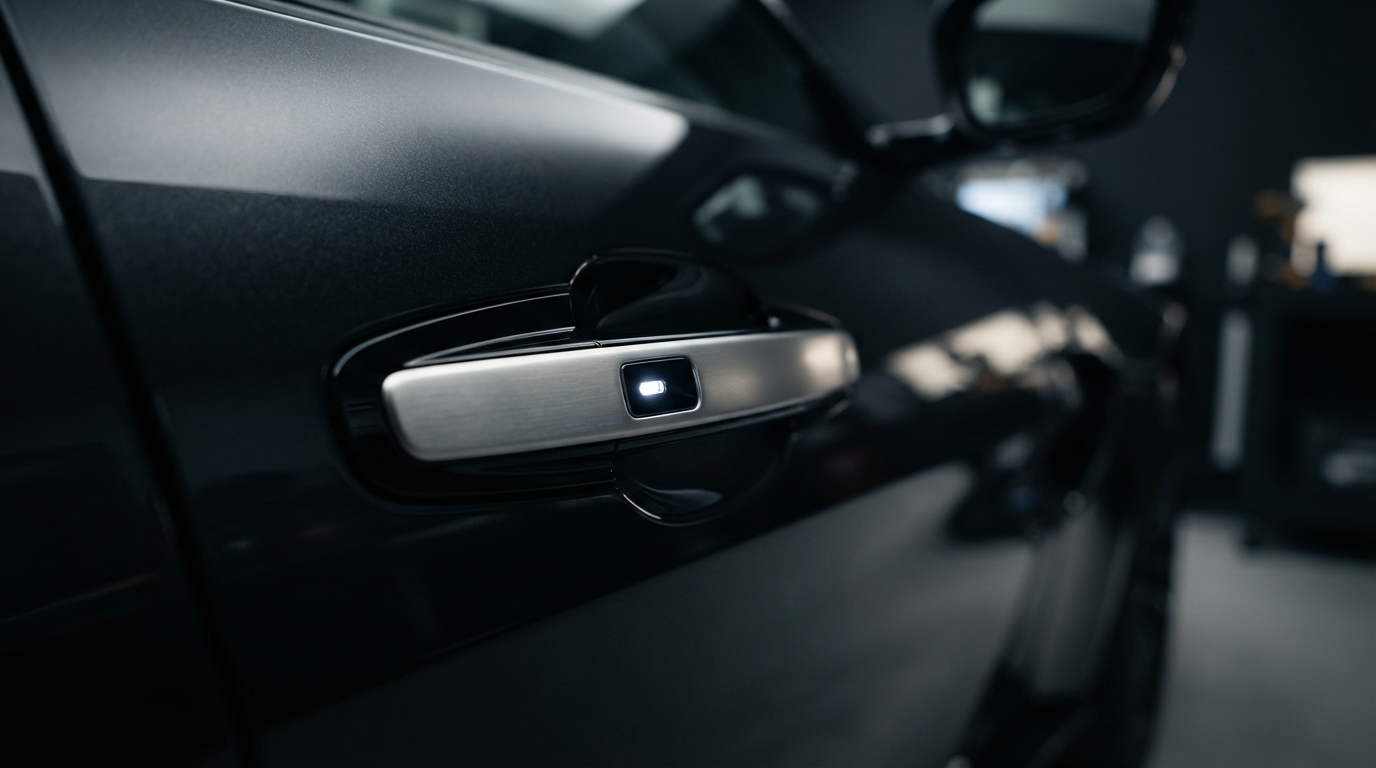
Smart keys allow keyless entry and push-button start. The fob communicates with the vehicle when in proximity, and no physical key insertion is required. Many smart keys include a hidden emergency key blade for backup access.
Signs You May Need a Fob Replacement
Several indicators suggest fob replacement may be needed:
- Non-responsive buttons — The fob buttons don't work even after battery replacement
- Intermittent operation — The fob works sometimes but not consistently
- Physical damage — Cracked case, broken buttons, or water damage
- Lost or stolen — The fob is missing and may be in someone else's hands
- Vehicle not detecting — Smart key proximity functions don't work
- Multiple battery replacements — If the fob drains batteries quickly, internal electronics may be failing
The Replacement Process
Replacing a key fob involves several steps:
#### 1. Vehicle Identification
The first step is identifying the exact vehicle to determine the correct fob:
- Make, model, and year — Essential for identifying the correct fob part
- VIN (Vehicle Identification Number) — Provides the exact vehicle configuration
- Current fob information — If available, the FCC ID on the back of the current fob helps identify the correct replacement
- Vehicle features — Remote start, power liftgate, etc. affect which fob is needed
#### 2. Fob Sourcing
The correct replacement fob must be sourced:
- OEM (Original Equipment Manufacturer) fobs — Made by the vehicle manufacturer; highest quality and compatibility
- Aftermarket fobs — Made by third parties; may be less expensive but compatibility can vary
- Refurbished fobs — Used fobs that have been reconditioned; availability varies
The fob must match the vehicle's frequency, protocol, and feature set. An incorrect fob will not program or function properly.
#### 3. Programming
Once the correct fob is obtained, it must be programmed to the vehicle:
- Remote programming — The remote control functions (lock, unlock, trunk) must be synced to the vehicle
- Immobilizer programming — If the fob includes a transponder or smart key, it must be programmed to the immobilizer system
- Proximity registration — For smart keys, the vehicle must learn the fob's proximity identifier
Programming methods vary by vehicle:
- On-board programming — Some vehicles allow fob programming using a sequence of actions with the vehicle
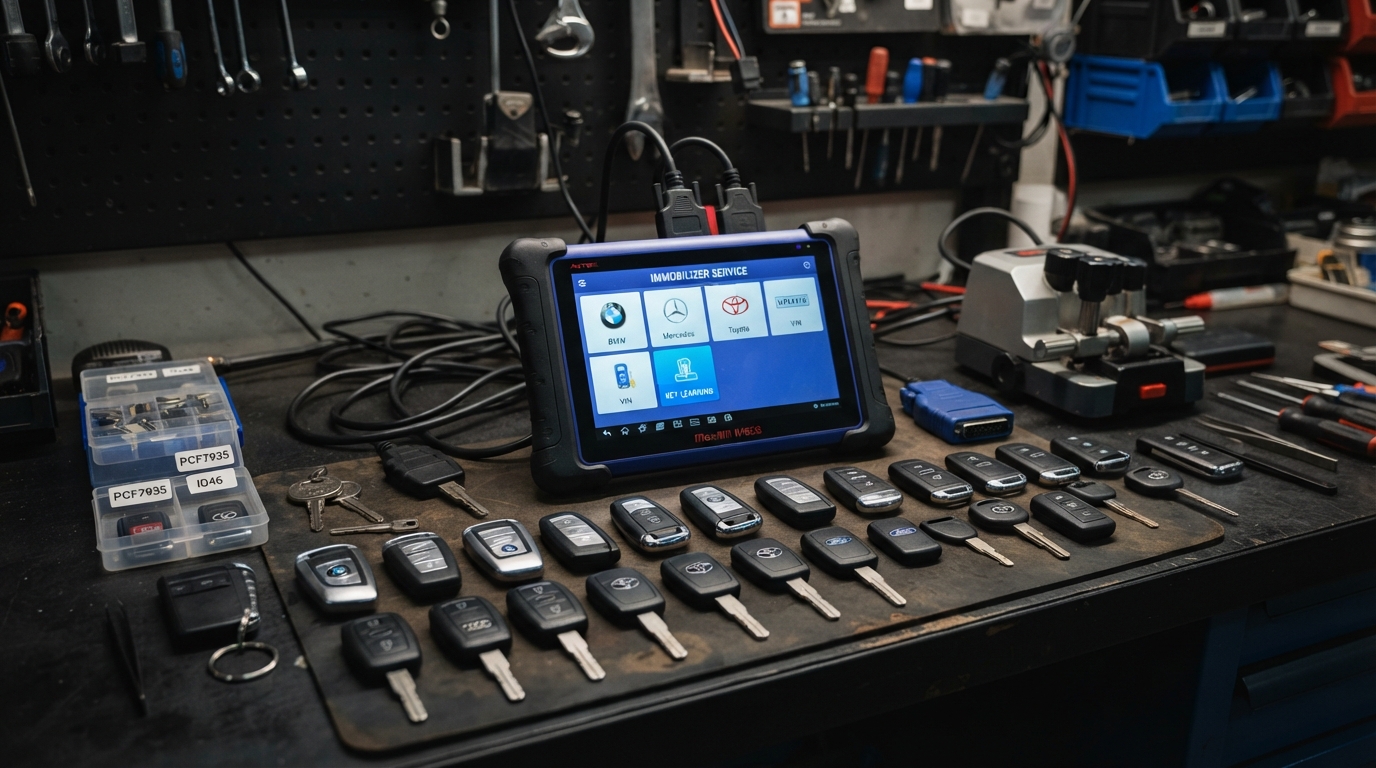
- Diagnostic programming — Most vehicles require diagnostic equipment connected to the OBD-II port
- PIN code access — Many vehicles require a PIN code to access programming functions
#### 4. Testing
After programming, all fob functions are tested:
- Remote lock/unlock — Tested from various distances
- Trunk/hatch release — Verified operation
- Panic button — Confirmed activation
- Proximity functions — For smart keys, door unlock and push-button start are tested
- Immobilizer function — The vehicle starts with the new fob
#### 5. Old Fob Handling
If replacing a lost or stolen fob:
- Deletion from system — On many vehicles, the lost fob can be deleted from the vehicle's memory so it no longer works
- Verification — Confirm the old fob no longer operates the vehicle
- Security consideration — If the fob was stolen, deletion is important to prevent unauthorized access
Compatibility Considerations
#### Frequency
Key fobs operate on specific radio frequencies—commonly 315 MHz or 433 MHz in North America. The replacement fob must match the vehicle's frequency. Using a fob with the wrong frequency will result in programming failure.
#### Protocol
Different vehicles use different communication protocols between the fob and the vehicle:
- Fixed code — The fob transmits the same code every time (older systems)
- Rolling code — The code changes with each use for security (most modern systems)
- Encrypted communication — Some vehicles use encrypted communication for enhanced security
The replacement fob must support the vehicle's protocol.
#### Feature Matching
The replacement fob should match the original fob's features:
- If the original had remote start, the replacement should too
- If the original had a hidden key blade, the replacement should include one
- If the vehicle has a power liftgate, the fob should include that button
Some fobs can be programmed with fewer features than they have (e.g., a 5-button fob on a vehicle that only needs 3 buttons), but the reverse is not true.
#### Region
Fobs are region-specific. A fob designed for the European market may not work on a North American vehicle, even if the make and model are the same. Ensure the replacement fob is for the correct region.
Battery Considerations
#### Fob Battery Life
Key fob batteries typically last 1-4 years depending on:
- Usage frequency — More use means shorter battery life
- Fob type — Smart keys with continuous proximity communication drain batteries faster
- Battery quality — Higher-quality batteries last longer
- Environmental factors — Temperature extremes can affect battery life
#### Battery Replacement
Many fob batteries can be replaced by the owner:
- Common battery types — CR2032, CR2025, CR2450 are common fob batteries
- Replacement procedure — Varies by fob; some require a small screwdriver or coin to open
- After replacement — Some fobs need reprogramming after battery replacement; most do not
If the fob doesn't work after battery replacement, the fob itself may need replacement or professional service.
#### Low Battery Indicators
Many vehicles provide low battery warnings:
- Dashboard message — "Key fob battery low" or similar
- Reduced range — The fob works only at close range
- Intermittent operation — Functions work sometimes but not always
Addressing low battery warnings promptly prevents the fob from becoming completely non-functional.
Smart Key-Specific Considerations
#### Proximity System
Smart keys maintain constant communication with the vehicle when nearby. This means:
- Faster battery drain — Smart key batteries may need replacement more frequently
- Interference — Other electronic devices can sometimes interfere with proximity communication
- Multiple fobs — The vehicle can typically recognize multiple smart keys simultaneously
#### Emergency Key
Most smart keys include a hidden emergency key blade:
- Physical door access — Used to unlock the door if the fob battery is dead
- Ignition access — Some vehicles have a hidden key slot for emergency starting
- Importance of having it — The emergency key provides backup access; ensure it's included with replacement fobs
#### Push-Button Start with Dead Fob
If the smart key battery is dead:
- Door access — Use the emergency key blade to unlock the door
- Engine start — Many vehicles allow starting by holding the fob near the start button
- Fob replacement — Replace the battery or the fob as soon as possible
Factors Affecting Replacement Cost
Key fob replacement costs vary based on:
- Fob type — Smart keys cost more than standalone remotes
- Vehicle make — Luxury vehicles typically have more expensive fobs
- Fob source — OEM fobs cost more than aftermarket
- Programming method — Diagnostic programming requires equipment and time
- Number of fobs — Programming multiple fobs at once may be more efficient
- Deletion of old fobs — Additional programming steps to delete lost fobs
- Emergency key cutting — If the fob includes a key blade, it must be cut to the vehicle
All costs are presented for approval before authorized work begins.
What to Discuss Before Authorizing Work
Before authorizing fob replacement, discuss:
- Fob options — OEM vs. aftermarket and the trade-offs
- Programming method — What's involved and how long it takes
- Old fob deletion — Whether lost fobs can be deleted from the system
- Warranty — What warranty applies to the fob and programming
- Total cost — All costs including fob, programming, and any additional services
- Timeline — When the work can be completed based on current availability
Preparing for Fob Replacement
To prepare for fob replacement:
- Gather vehicle information — Make, model, year, and VIN
- Locate proof of ownership — Registration, title, or insurance documents
- Bring personal ID — Driver's license or other government-issued identification
- Note the FCC ID — If you have the original fob, note the FCC ID number on the back
- List required features — Note which fob features your vehicle needs
Conclusion
Key fob replacement is a technical process that requires the correct fob, proper programming equipment, and professional expertise. By understanding the process and preparing the necessary information, you can ensure a smooth replacement experience. Always discuss options, costs, and timeline before authorizing work.
Contact D'Alembert Locksmith to discuss key fob replacement needs, current availability, and suitable service options for your vehicle.