Understanding Car Key Programming
Modern vehicle keys bear little resemblance to the simple metal keys of the past. Today's car keys contain sophisticated electronics that communicate with the vehicle's computer systems to prevent theft and enable advanced features. This guide explains how modern vehicle keys work, what programming involves, and why specialized equipment is required.
The Evolution of Vehicle Keys
#### Traditional Metal Keys
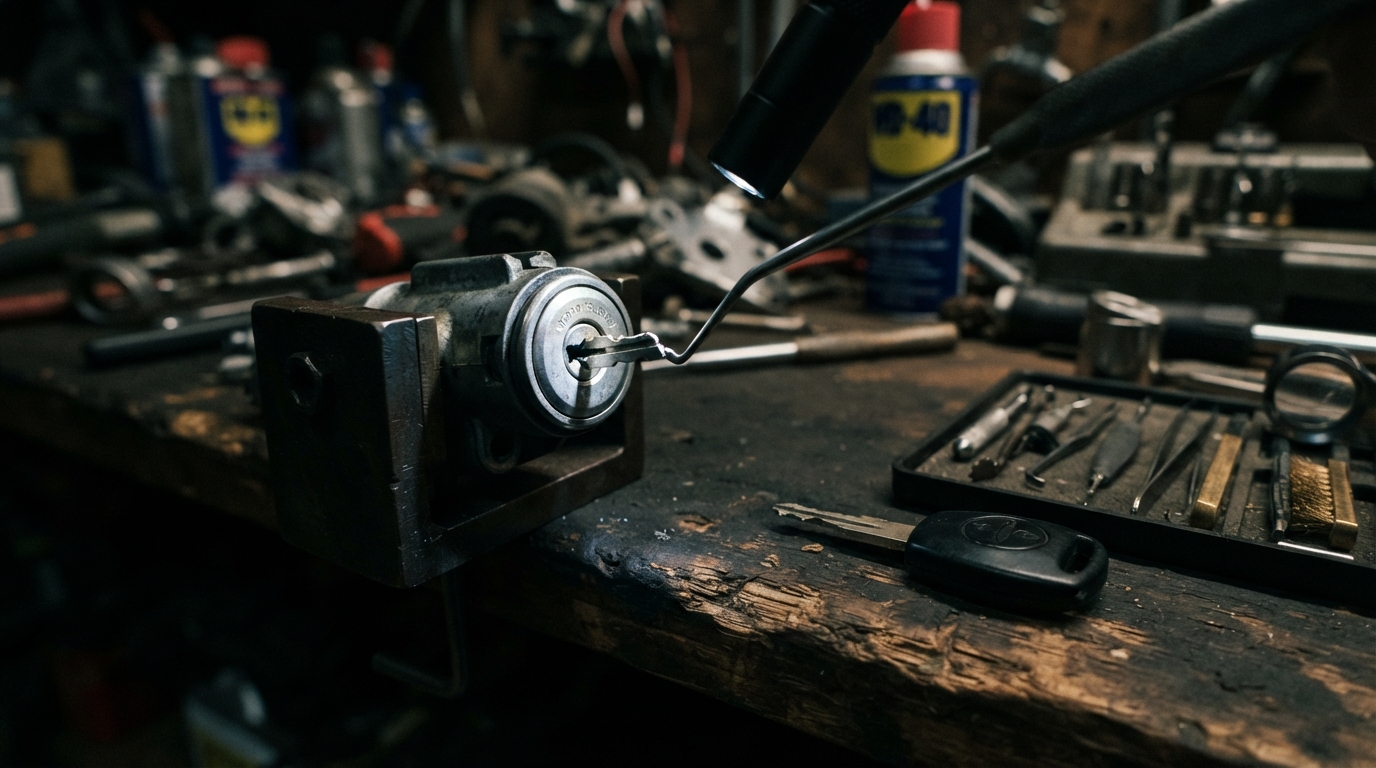
Early vehicle keys were simple mechanical devices—a cut metal blade that matched the internal wards of the ignition cylinder. Security was limited to the physical uniqueness of the key cut. These keys could be duplicated at any hardware store with a key cutting machine.
#### Transponder Keys
In the 1990s, vehicle manufacturers began embedding transponder chips in keys to combat rising vehicle theft rates. A transponder (transmitter-responder) chip:
- Is embedded in the key head (the plastic part)
- Contains a unique electronic code
- Communicates with the vehicle's immobilizer system
- Must be programmed to the specific vehicle
When the key is inserted into the ignition, the vehicle sends a signal to the transponder chip. The chip responds with its unique code. If the code matches what the vehicle's computer expects, the immobilizer allows the engine to start. If the code doesn't match—or if there's no chip—the vehicle won't start.
This system dramatically reduced vehicle theft because a mechanically copied key without the correct transponder code cannot start the vehicle.
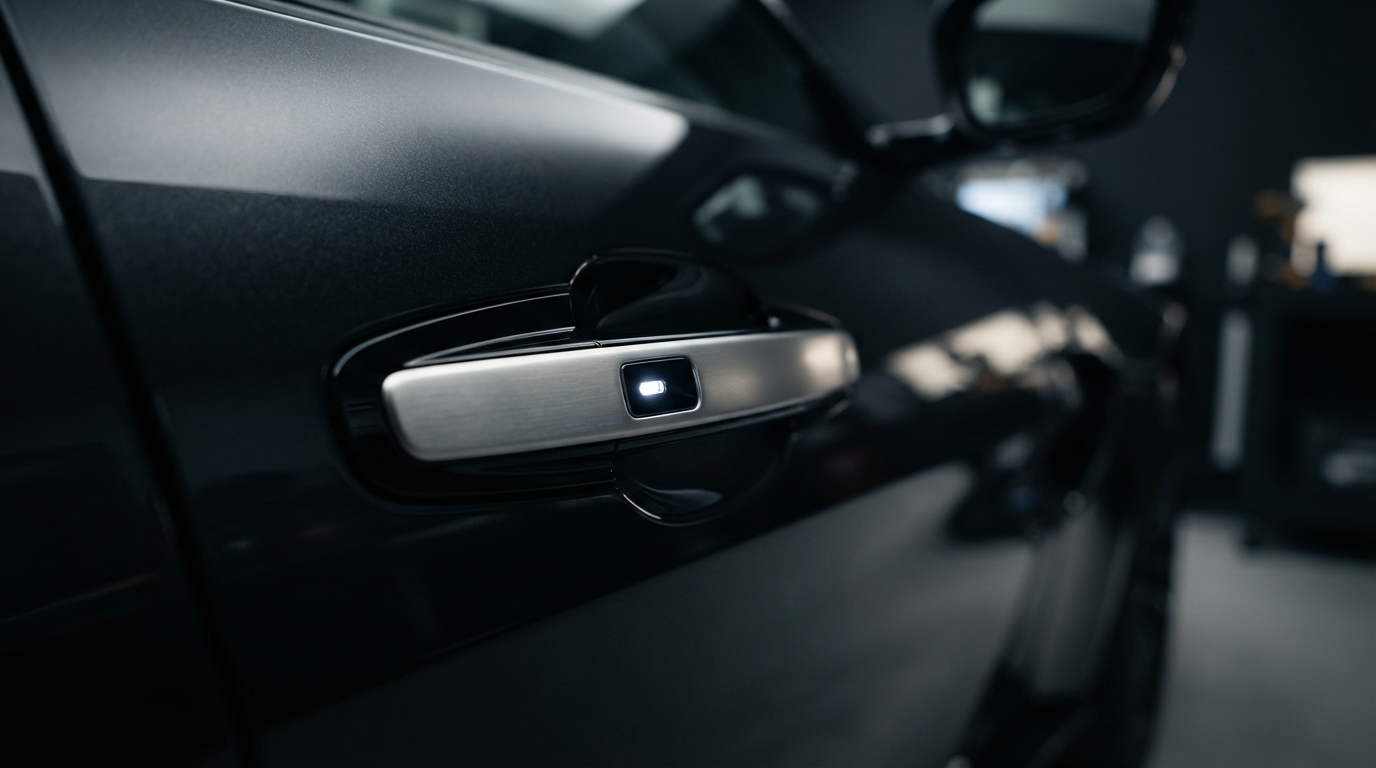
#### Smart Keys and Proximity Keys
Smart keys (also called proximity keys or keyless entry remotes) take the concept further:
- No physical key insertion is required
- The vehicle detects the smart key's presence when it's near the car
- Doors unlock when the key is in range and the door handle is touched or a button is pressed
- The engine starts with a push button when the key is inside the vehicle
- Communication occurs via RFID (Radio Frequency Identification) or similar wireless protocols
Smart keys contain both the immobilizer transponder and remote control functionality in a single device.
#### Push-Button Start Systems
Vehicles with push-button start rely entirely on the smart key's presence:
- The vehicle continuously polls for the smart key's presence
- When detected inside the vehicle, the push button is enabled
- The immobilizer is deactivated when the correct smart key is confirmed
- The key may remain in a pocket or purse throughout the entire process
How Transponder Programming Works
Programming a transponder key involves syncing the key's chip with the vehicle's immobilizer system. The process varies by vehicle make, model, and year, but generally involves:
#### On-Board Programming
Some vehicles allow on-board programming—programming the key using a sequence of actions with the vehicle itself:
- Entering programming mode — Using a specific sequence of key turns, door openings, or pedal presses
- Key synchronization — Inserting the new key and waiting for the immobilizer to recognize it
- Confirmation — The vehicle confirms programming through dashboard indicators or sounds
On-board programming works for some vehicles but not all. The procedures are vehicle-specific and may not be publicly available for all models.
#### Diagnostic Equipment Programming
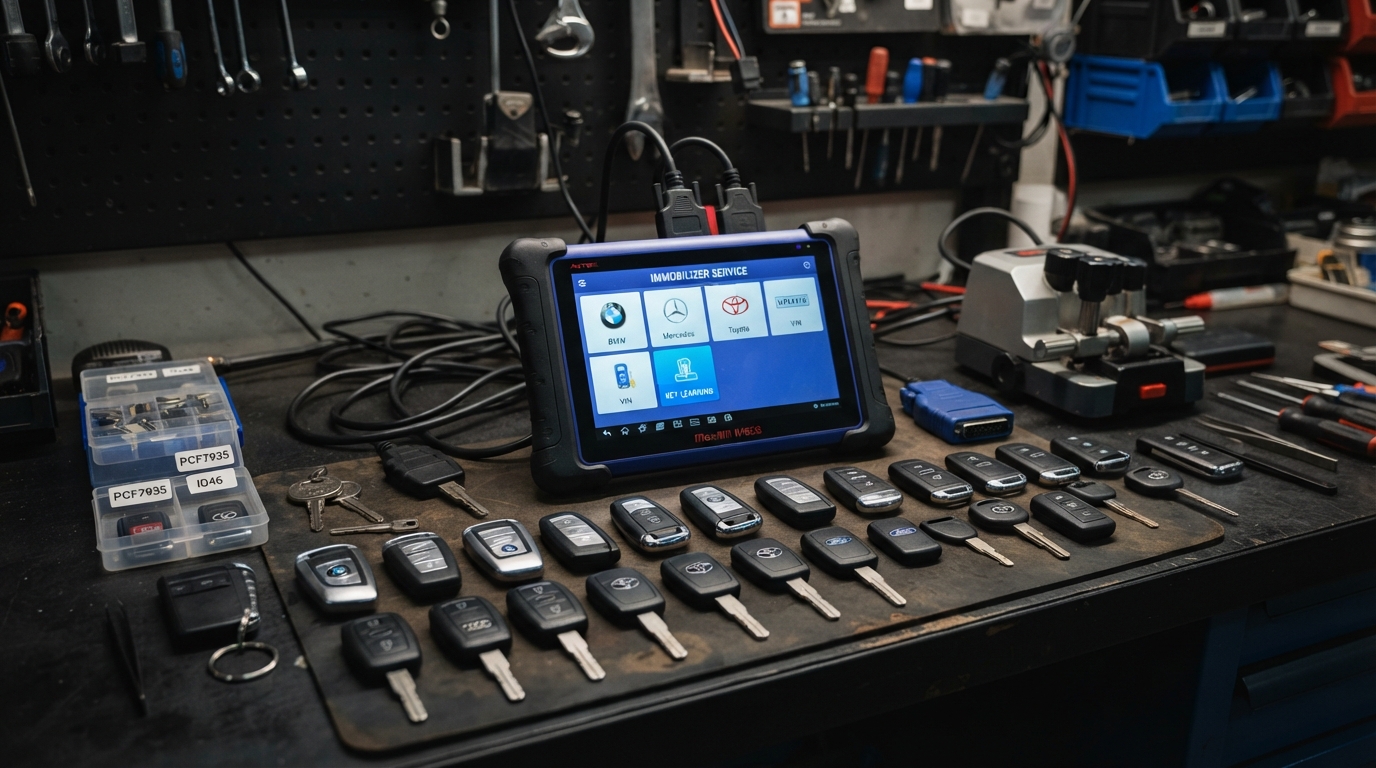
Most modern vehicles require diagnostic equipment for key programming:
- Connecting to the OBD-II port — A programming tool connects to the vehicle's On-Board Diagnostics port
- Accessing the immobilizer system — The tool communicates with the vehicle's computer to access the immobilizer
- Reading the PIN code — Many vehicles require a PIN code to access programming functions. The PIN may be obtained from the manufacturer, a database, or extracted from the vehicle
- Programming the key — The tool writes the new key's transponder code to the vehicle's immobilizer
- Verification — The tool verifies successful programming and the key is tested in the ignition
Diagnostic equipment is expensive and requires regular software updates to support new vehicle models. This is why specialized equipment is necessary for key programming.
#### EEPROM Programming
Some vehicles require EEPROM programming—a more complex process that involves:
- Reading the vehicle's EEPROM — The memory chip that stores immobilizer data is read, sometimes requiring removal from the vehicle's computer
- Modifying the data — The new key's code is written to the EEPROM data
- Writing the data back — The modified data is written back to the vehicle's computer
EEPROM programming is the most complex method and is typically used for older or European vehicles where diagnostic programming is not supported.
Smart Key Programming
Programming smart keys involves additional steps beyond transponder programming:
#### Proximity System Registration
The vehicle must recognize the smart key for proximity functions:
- Entering smart key programming mode — Via diagnostic equipment or on-board procedure
- Registering the smart key — The vehicle learns the smart key's unique identifier
- Testing proximity functions — Verifying that door unlock, push-button start, and other features work correctly
#### Remote Control Programming
Smart keys also include remote control functions (lock, unlock, trunk, panic):
- Remote frequency matching — The remote's frequency must match the vehicle's receiver
- Remote code registration — The vehicle learns the remote's unique code
- Testing remote functions — Verifying all buttons work correctly
Why Specialized Equipment Is Required
Several factors make specialized equipment necessary for car key programming:
#### Vehicle Communication Protocols
Modern vehicles use various communication protocols (CAN bus, K-Line, etc.) to communicate between computers. Programming equipment must support these protocols to access the immobilizer system.
#### Security Access
Vehicle manufacturers implement security measures to prevent unauthorized key programming:
- PIN codes — Required to access programming functions on many vehicles
- Token systems — Some manufacturers use token-based systems that require paid access
- Encrypted communications — Communication between the programming tool and vehicle may be encrypted
- Rolling codes — Some systems use rolling codes that change with each programming attempt
#### Software Updates
New vehicle models are released every year, each with potentially different programming procedures. Programming equipment manufacturers provide regular software updates to support new models. Without current software, a locksmith cannot program keys for the latest vehicles.
#### Multi-Platform Support
A locksmith may service vehicles from many manufacturers (Ford, Toyota, Honda, BMW, Mercedes, etc.). Each manufacturer has different programming procedures, PIN code retrieval methods, and equipment requirements. Comprehensive programming equipment supports multiple manufacturers, but this requires significant investment in hardware and software.
What Information to Have Ready
When calling about car key programming, having the following information ready helps:
- Vehicle make — e.g., Ford, Toyota, BMW
- Vehicle model — e.g., F-150, Camry, 3 Series
- Year — The model year of the vehicle
- VIN (Vehicle Identification Number) — If available, the VIN helps identify the exact vehicle configuration
- Existing keys — Whether you have any working keys or all keys are lost
- Key type — Transponder key, smart key, or push-button start (if known)
This information helps the locksmith determine the correct key blank, programming procedure, and whether the vehicle can be serviced.
Authorization and Identity Verification
Vehicle key programming requires authorization and identity verification:
- Proof of ownership — Vehicle registration, title, or insurance documents
- Personal identification — Driver's license or other government-issued ID
- Authorization confirmation — For vehicles not owned by the requester, authorization from the owner may be required
This verification is standard practice and protects against unauthorized key duplication. A locksmith will not program keys without proper authorization.
Factors Affecting Programming Cost
Car key programming costs vary based on:
- Key type — Transponder keys are generally less expensive than smart keys
- Vehicle make and model — Luxury and European vehicles often cost more
- Programming method — On-board programming is simpler; diagnostic or EEPROM programming is more complex
- Number of keys — Programming multiple keys at once may be more efficient
- All keys lost — When all keys are lost, the process is more complex and costly
- Key blank cost — Smart key blanks are more expensive than transponder key blanks
- PIN code retrieval — Some vehicles require paid PIN code access
All costs are presented for approval before authorized work begins.
Common Scenarios
#### Spare Key Programming
Having a spare key programmed before you need it is a practical measure:
- Provides a backup if the primary key is lost or damaged
- May be less expensive than an all-keys-lost situation
- Can be done at your convenience rather than in an emergency
#### Lost Key Replacement
When a key is lost:
- The new key must be programmed to the vehicle
- On some vehicles, the lost key can be deleted from the system to prevent it from being used
- Having a spare key reduces the urgency and complexity of replacement
#### All Keys Lost
When all keys are lost:
- The process is more complex and typically more expensive
- The vehicle may need to be accessed without a key
- The immobilizer system must be accessed to add new keys
- Some vehicles require the immobilizer or ECU to be removed for programming
Limitations and Considerations
Not all vehicles can be programmed by all locksmiths:
- Proprietary systems — Some manufacturers use proprietary systems that may require dealership involvement
- New models — Very new models may not yet be supported by aftermarket programming equipment
- High-security vehicles — Some luxury vehicles have enhanced security that limits aftermarket key programming
- Key availability — Some key blanks may be special-order or require dealer sourcing
A locksmith can confirm whether your specific vehicle can be serviced before you commit to the work.
Conclusion
Car key programming is a complex process that requires specialized equipment, current software, and professional expertise. Understanding how modern vehicle keys work helps you appreciate why programming requires specialized service and why it costs more than traditional key cutting.
Contact D'Alembert Locksmith to discuss car key programming needs, current availability, and suitable service options for your vehicle.