Lock Repair: Common Issues and Professional Solutions
Locks are mechanical devices that experience wear, damage, and environmental exposure over time. Understanding common lock problems, their causes, and when repair is possible helps property owners maintain their security hardware and know when to call a professional. This guide covers the most frequent lock issues and their solutions.
Why Locks Fail
Locks fail for several reasons:
- Normal wear — Moving parts experience friction and wear over thousands of cycles
- Environmental exposure — Humidity, salt air, and temperature changes affect metal components
- Improper use — Forcing keys, using the wrong key, or slamming doors damages mechanisms
- Lack of maintenance — Locks need occasional lubrication and cleaning
- Manufacturing defects — Some locks have inherent quality issues
- Forced entry attempts — Break-in attempts can damage internal components
- Age — Old locks simply wear out
In Miami's humid, coastal environment, environmental factors accelerate wear. Salt air can cause corrosion in lock components, particularly in beachfront properties. Regular maintenance is especially important in South Florida.
Common Lock Problems
#### Problem: Key Won't Turn
Possible causes:- Worn pins — Internal pins have worn down, preventing proper alignment at the shear line
- Dirty lock — Dust, debris, or oxidized metal has accumulated inside the cylinder
- Misaligned door — The door has shifted in the frame, putting pressure on the bolt
- Wrong key — A similar but incorrect key has been inserted
- Broken key — Part of a broken key is stuck inside the cylinder
- Frozen pins — In rare South Florida cases, moisture has caused internal corrosion
- Worn key — The key itself is worn and no longer matches the pin heights
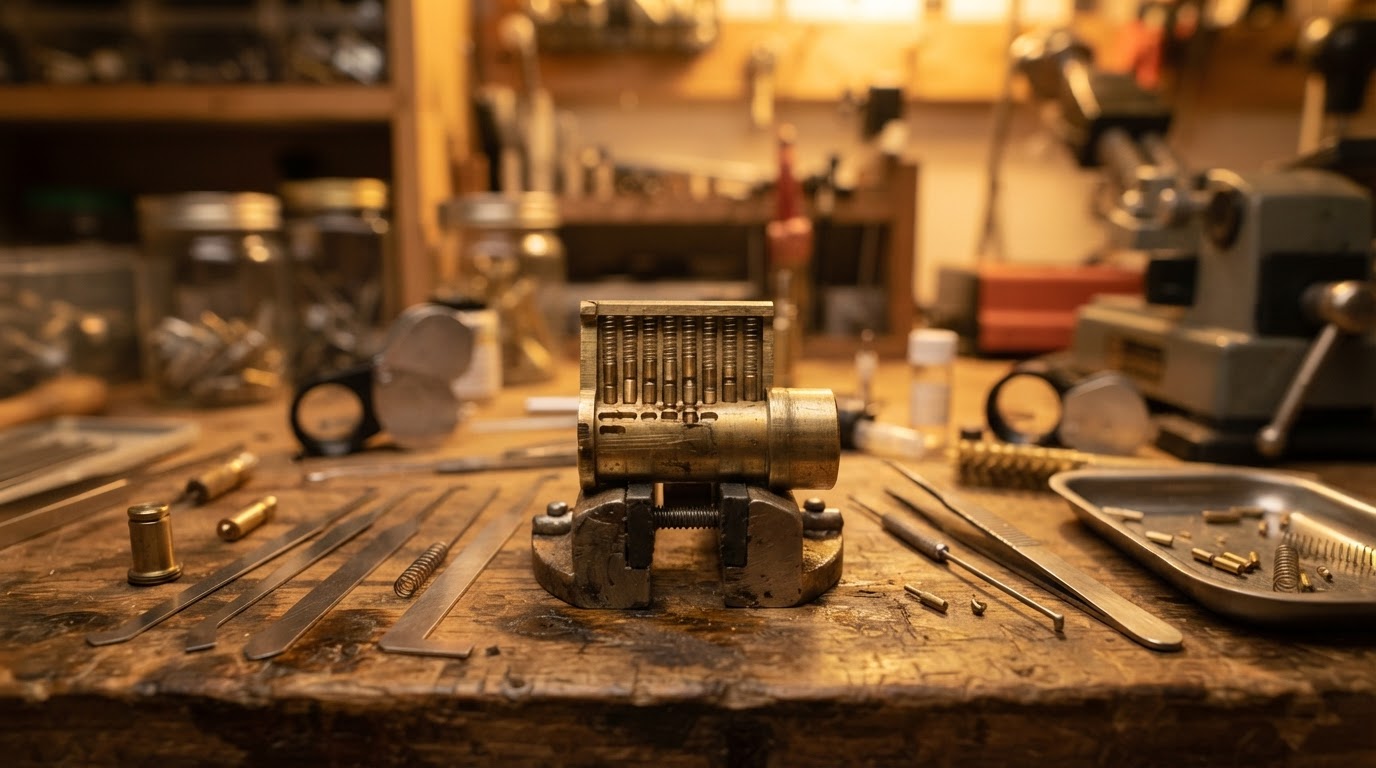
- Professional cleaning — The cylinder is disassembled, cleaned, and reassembled
- Pin replacement — Worn pins are replaced with new ones (similar to rekeying)
- Door realignment — The door is adjusted to eliminate pressure on the bolt
- Key duplication — A new key is cut from the original bitting
- Broken key extraction — A broken key is extracted from the cylinder
- Lock replacement — If the cylinder is too worn, replacement may be needed
#### Problem: Key Is Hard to Insert or Remove
Possible causes:- Dirty cylinder — Debris in the keyway prevents smooth key insertion
- Worn or damaged pins — Pins that don't retract properly create friction
- Bent key — A bent key doesn't align with the pin chambers
- Damaged keyway — The keyway has been damaged by previous forced insertion
- Wrong key blank — A key cut on the wrong blank doesn't fit properly
- Cleaning — Professional cleaning of the cylinder
- Pin replacement — Replacing worn pins
- Key replacement — Cutting a new key from the correct blank
- Cylinder replacement — If the keyway is damaged
#### Problem: Lock Won't Latch Properly
Possible causes:- Misaligned strike plate — The strike plate in the door frame doesn't align with the bolt
- Door settling — The door has shifted in the frame over time
- Worn latch — The latch mechanism is worn and doesn't extend fully
- Obstruction — Something is blocking the strike hole
- Warped door or frame — The door or frame has warped due to humidity
- Strike plate adjustment — Repositioning or replacing the strike plate
- Door adjustment — Adjusting hinges or the door to realign with the frame
- Latch replacement — Replacing the worn latch mechanism
- Strike hole cleaning — Removing obstructions from the strike hole
- Frame repair — Addressing warped frames (may require a carpenter)
This problem is common in Miami due to humidity-related wood expansion and contraction. Doors that worked perfectly in dry seasons may develop latching issues during humid periods.
#### Problem: Bolt Won't Extend or Retract
Possible causes:- Broken bolt mechanism — Internal components that control bolt movement are broken
- Obstruction — Something is blocking the bolt path
- Misalignment — The bolt doesn't align with the strike hole
- Worn mechanism — The bolt mechanism is too worn to function
- Frozen bolt — Corrosion has seized the bolt mechanism
- Mechanism repair — Replacing broken internal components
- Obstruction removal — Clearing the bolt path
- Realignment — Adjusting the door or strike
- Lock replacement — If the mechanism is too worn or damaged
#### Problem: Lock Cylinder Spins Freely
Possible causes:- Broken retaining clip — The clip that holds the cylinder in place has broken
- Stripped cylinder — The cylinder's threading is stripped (mortise cylinders)
- Loose mounting screws — The screws holding the cylinder have loosened
- Retaining clip replacement — Installing a new retaining clip
- Cylinder replacement — If the cylinder is stripped
- Tightening — Tightening loose mounting screws
This is a security issue—a spinning cylinder may not properly lock the door. It should be addressed promptly.
#### Problem: Key Gets Stuck in the Lock
Possible causes:- Worn pins — Pins that don't retract properly grab the key
- Dirty lock — Debris creates friction on the key
- Bent key — A bent key catches on the pins
- Damaged keyway — Burrs or damage in the keyway catch the key
- Cleaning and lubrication — Professional cleaning of the cylinder
- Pin replacement — Replacing worn pins
- Key replacement — Cutting a new key
- Cylinder repair or replacement — If the keyway is damaged
#### Problem: Lock Makes Unusual Noises
Possible causes:- Worn pins — Pins clicking or grinding during operation
- Loose components — Internal parts rattling
- Dry mechanism — Lack of lubrication causes friction noises
- Damaged components — Broken parts scraping
- Lubrication — Applying appropriate lock lubricant
- Cleaning — Removing debris
- Component replacement — Replacing worn or damaged parts
- Lock replacement — If damage is extensive
The Professional Repair Process
When you call a locksmith about a lock problem, the process typically includes:
#### 1. Problem Discussion
You describe the issue—what's happening, when it started, and what you've tried. This helps the technician prepare.
#### 2. Lock Assessment
The technician examines the lock:
- Visual inspection — Checking for visible damage, wear, or misalignment
- Operational test — Testing the key, bolt, and latch to identify the specific issue
- Internal inspection — If needed, removing the cylinder to inspect internal components
- Door and frame assessment — Checking for alignment issues that affect lock operation
#### 3. Diagnosis
Based on the assessment, the technician identifies the problem and determines whether repair or replacement is the best option:
- Repairable — The lock can be fixed with cleaning, lubrication, pin replacement, or component replacement
- Needs replacement — The lock is too worn or damaged for repair to be reliable
#### 4. Options Presentation
Options are presented with explanations and pricing:
- Repair option — What will be done, what it will cost, and how long it's expected to last
- Replacement option — What new hardware is recommended, cost, and benefits
- Recommendation — The technician's professional recommendation based on the lock's condition
#### 5. Approval
Scope and pricing are presented for approval before any work begins.
#### 6. Repair Execution
The approved work is performed:
- Disassembly — The lock is disassembled as needed
- Cleaning — Internal components are cleaned
- Component replacement — Worn or damaged parts are replaced
- Reassembly — The lock is reassembled and reinstalled
- Testing — The repaired lock is tested for proper operation
#### 7. Review
The completed work is reviewed with you to ensure the lock operates correctly and you're satisfied with the result.
Preventive Maintenance
Many lock problems can be prevented with regular maintenance:
#### Lubrication
- What to use — Graphite powder or a PTFE-based lock lubricant
- What not to use — Oil-based lubricants (WD-40) attract dust and create buildup over time
- Frequency — Every 6-12 months for residential locks; more frequently for high-use commercial locks
- Method — Apply a small amount to the key, insert and remove several times to distribute
#### Cleaning
- Keyway cleaning — Use compressed air or a keyway cleaning tool to remove debris
- Exterior cleaning — Wipe the lock exterior with a soft cloth
- Frequency — As needed, or during regular maintenance
#### Inspection
- Visual check — Look for signs of wear, damage, or corrosion
- Operational test — Test the key, bolt, and latch for smooth operation
- Strike plate check — Ensure the strike plate is secure and aligned
- Frequency — Every 6 months for residential; monthly for high-traffic commercial
#### Addressing Issues Early
- Don't ignore problems — A lock that's difficult to operate won't fix itself
- Call before it fails — Addressing issues early is less expensive than emergency service
- Schedule maintenance — Consider a preventive maintenance plan for commercial properties
Miami-Specific Maintenance Considerations
#### Humidity and Corrosion
Miami's high humidity accelerates corrosion in lock components:
- Coastal properties — Salt air is particularly corrosive; more frequent maintenance is needed
- Exterior locks — More exposed to humidity than interior locks
- Corrosion-resistant finishes — Choose locks with corrosion-resistant finishes for exterior use
- Regular lubrication — Helps protect internal components from moisture
#### Hurricane Season
Before hurricane season:
- Check all exterior locks — Ensure they operate smoothly
- Lubricate locks — Prevent moisture-related issues during storms
- Check storm shutters — Ensure shutter locks operate properly
- Post-storm inspection — Check locks after storms for water damage
When to Call a Professional
Call a locksmith when:
- A lock is difficult to operate (key won't turn, bolt won't extend)
- A lock makes unusual noises
- A key is stuck or broken in the lock
- A lock doesn't latch properly
- After a break-in attempt
- For regular maintenance (commercial properties)
- When considering lock replacement or upgrade
Don't wait until a lock completely fails. Addressing issues early is less expensive and prevents being locked out of your property.
Conclusion
Lock problems are common but often fixable with professional service. Understanding the common issues, their causes, and the repair process helps you know when to call a professional and what to expect. Regular maintenance prevents many problems and extends the life of your lock hardware.
Contact D'Alembert Locksmith to discuss lock repair needs, current availability, and suitable service options.