Electronic Access Control Explained: Keyless Security for Properties
Electronic access control systems have transformed how properties manage entry, offering capabilities that go far beyond traditional mechanical locks. This guide provides a comprehensive explanation of electronic access control systems, their components, authentication methods, and how they compare to traditional mechanical security.
What Is Electronic Access Control?
Electronic access control (EAC) is a security system that uses electronic components to manage and monitor entry to buildings or specific areas within buildings. Unlike mechanical locks that provide simple binary access (the key works or it doesn't), EAC systems offer granular control over who can enter, when, and where.
#### Core Capabilities
Electronic access control provides capabilities that mechanical locks cannot:
- Individual user management — Each person has unique credentials
- Time-based access control — Restricting access to specific days and hours
- Area-based access control — Different access levels for different zones
- Audit trails — Records of every access event
- Remote management — Adding, removing, or modifying access without physical key changes
- Integration — Connecting with video surveillance, alarm systems, and building management
- Visitor management — Temporary credentials with automatic expiration
- Anti-passback — Preventing the same credential from being used to enter twice without exiting first
Authentication Methods
The authentication method is how a user proves their identity to the access control system. Different methods offer different levels of security, convenience, and cost.
#### PIN Codes (Something You Know)
PIN-based authentication uses a numeric code entered on a keypad:
Advantages:- No physical credential to carry or lose
- Easy to change codes
- Multiple codes for different users
- Low cost
- Codes can be shared or observed
- No individual identification (in basic systems)
- Users may forget codes
- Keypad wear can reveal frequently used codes
PIN codes are appropriate for low-to-medium security applications where convenience and cost are primary considerations.
#### Cards and Fobs (Something You Have)
Card-based authentication uses a physical credential—typically a proximity card or fob:
Proximity cards (prox cards): Use RFID technology to communicate with the reader when held nearby (typically 1-6 inches). They are durable, fast to read, and widely used. Smart cards: Contain embedded chips that can store more information and support encryption, providing higher security than basic prox cards. Advantages:- Individual user identification
- Easy to deactivate (for lost cards or terminated employees)
- Fast and convenient
- Audit trail capability
- Can combine with photo ID for visual verification
- Cards can be lost, stolen, or shared
- Cost per credential
- Reader hardware required
- Cards wear out over time
Card-based systems are the most common commercial access control solution, offering a good balance of security, convenience, and management features.
#### Biometrics (Something You Are)
Biometric authentication uses unique physical characteristics:
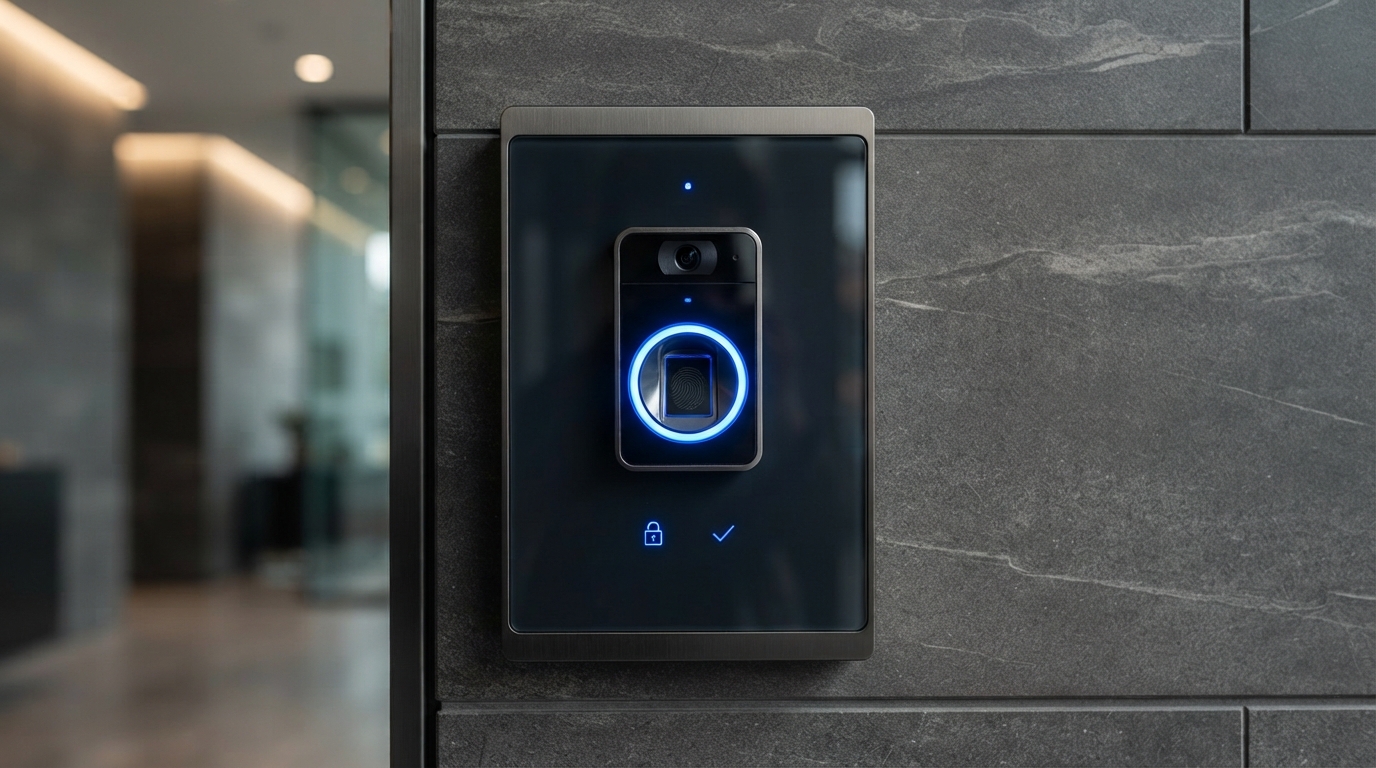
Fingerprint readers: Scan the user's fingerprint and compare it to enrolled templates. The most common biometric method. Facial recognition: Use cameras to identify users by facial features. Newer systems use 3D mapping and infrared for improved accuracy and anti-spoofing. Iris scanners: Use infrared imaging to identify the unique patterns in the iris. High accuracy but more expensive. Palm vein readers: Use near-infrared light to read the vein patterns in the palm. High accuracy and difficult to spoof. Advantages:- Credentials cannot be lost, stolen, or shared
- Highest level of identity verification
- No physical credentials to manage
- Strong audit trail with biometric verification
- Higher cost
- Enrollment required for each user
- Environmental factors can affect performance
- Privacy considerations for biometric data
- Some users may be uncomfortable with biometric enrollment
Biometric systems are appropriate for high-security areas where credential sharing must be eliminated.
#### Mobile Credentials (Something You Have - Digital)
Mobile credential systems use smartphones as access credentials:
Advantages:- Users always carry their phones
- No physical cards to manage
- Remote credential issuance and revocation
- Can include additional features (visitor management, notifications)
- Requires user smartphone enrollment
- Dependent on phone battery
- May require additional reader infrastructure
- Some users prefer physical cards
Mobile credentials are growing in popularity as smartphone adoption increases.
#### Multi-Factor Authentication
High-security applications may require multiple authentication methods:
- PIN + card — The user must present a card and enter a PIN
- Card + biometric — The user must present a card and verify biometrically
- PIN + biometric — The user must enter a PIN and verify biometrically
Multi-factor authentication significantly increases security by requiring the user to prove multiple aspects of their identity.
Access Control System Components
Understanding system components helps in planning and budgeting:
#### Credentials
The credential is what the user presents—card, fob, PIN code, smartphone, or biometric trait. Credential selection affects user experience, security level, and system cost.
#### Readers
Readers are installed at each controlled door:
- Proximity readers — Read prox cards and fobs
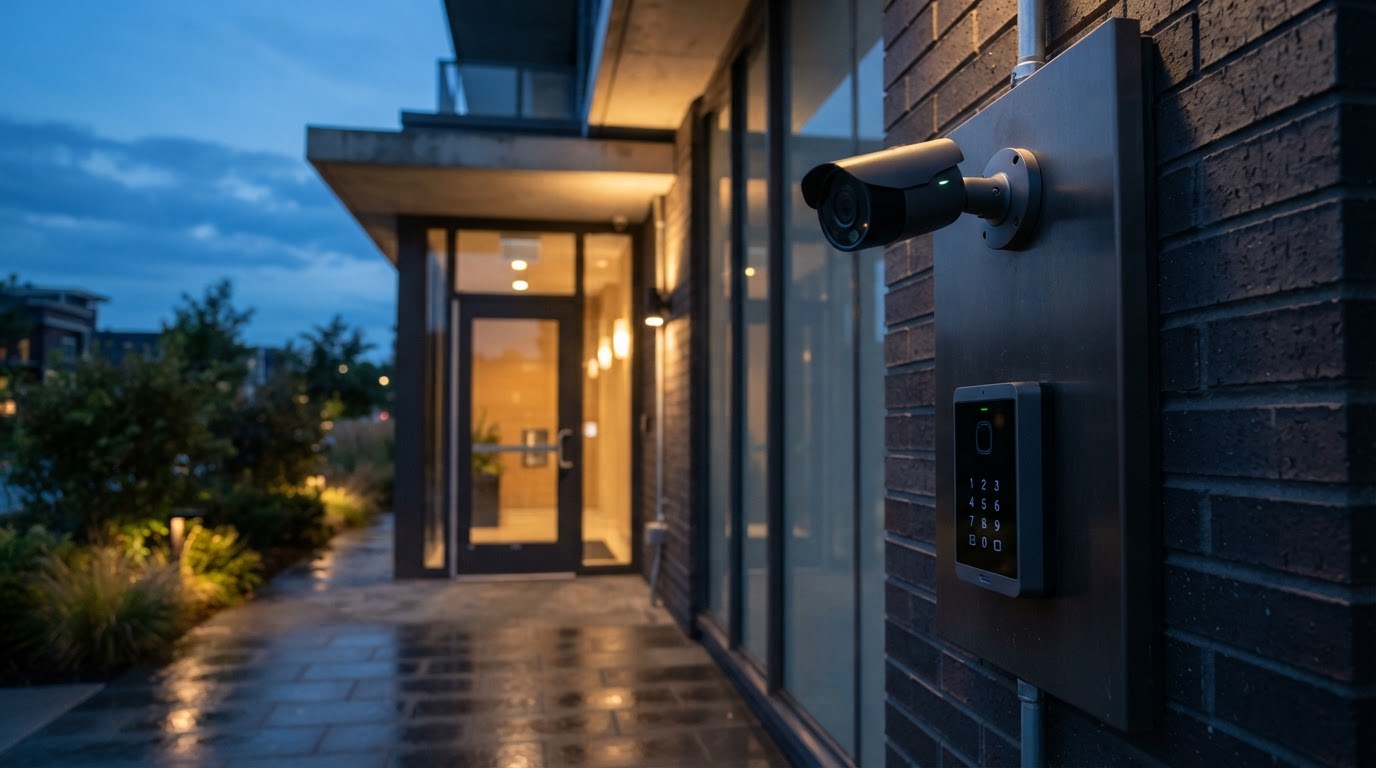
- Keypad readers — Accept PIN codes
- Multi-technology readers — Read multiple card types
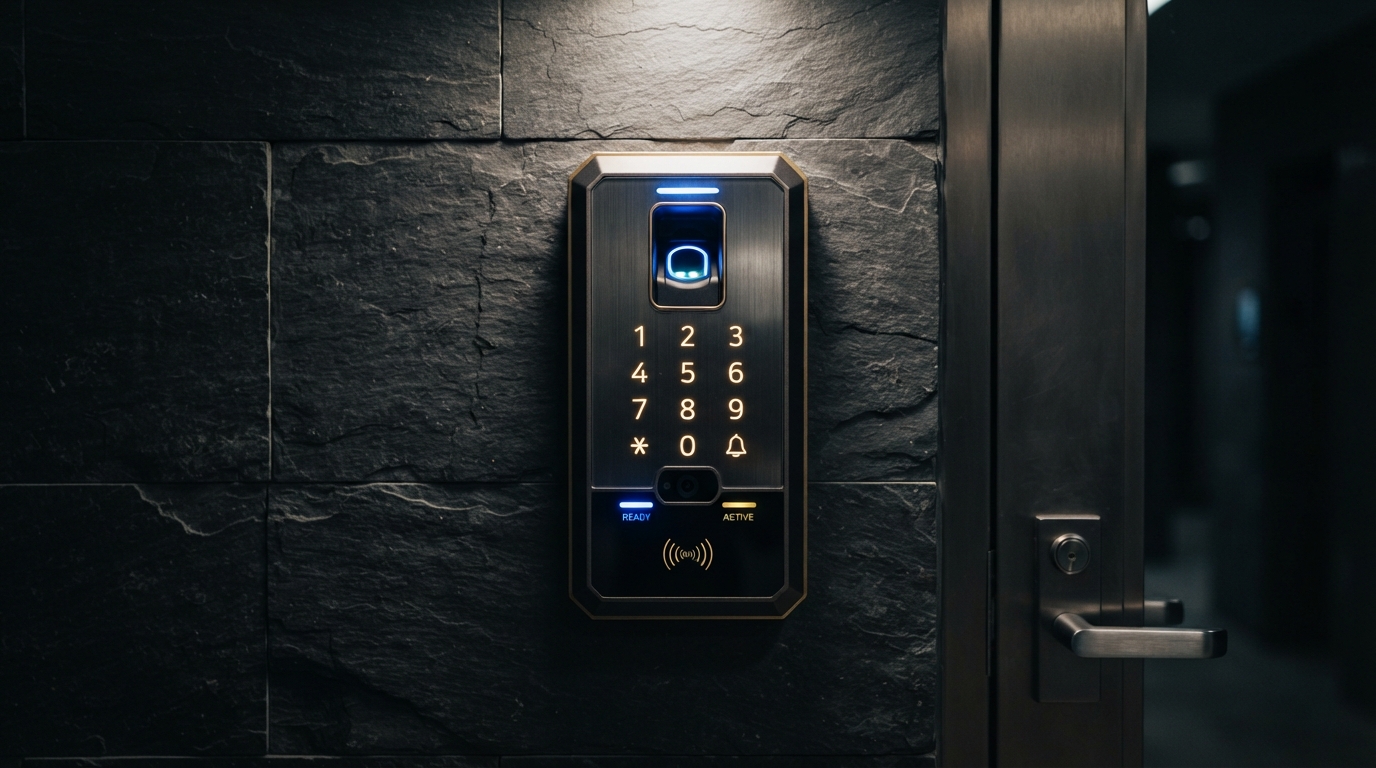
- Biometric readers — Scan fingerprints, faces, or irises
- Mobile readers — Communicate with smartphones via Bluetooth or NFC
Readers vary in style, from compact surface-mount units to larger pedestal-mounted readers. Reader selection depends on the credential type, environment, and aesthetic requirements.
#### Controllers
The controller is the system's decision-making component:
- Receives credential data from the reader
- Checks access permissions against the database
- Commands the locking hardware to unlock or remain locked
- Logs the access event for audit trails
- Communicates with the central management system
Controller types:
- Standalone controllers — Manage a single door independently; no network connection
- Networked controllers — Connected to a central server or cloud for multi-door management
- Edge controllers — Integrated with the reader in a single device
Networked controllers enable centralized management, real-time monitoring, and integration with other systems. The number of doors a controller can manage varies (typically 1, 2, 4, 8, or 16 doors per controller).
#### Locking Hardware
Access control systems control electrified locking hardware:
- Magnetic locks (maglocks) — Electromagnetic locks that hold the door closed when energized. Available in holding force ratings from 600 to 2,000+ lbs. Fail-safe (unlock on power loss).
- Electric strikes — Replace the standard strike plate and release the door latch when energized. Allow free egress from inside. Can be fail-safe or fail-secure.
- Electrified locksets — Complete lock assemblies with electronic control. Various configurations available.
- Electric panic hardware — Electrified exit devices for fire-rated doors. Must meet fire door requirements.
- Electrified mortise locks — Mortise locks with electronic control capabilities.
The appropriate locking hardware depends on:
- Door type (wood, metal, glass, aluminum)
- Fire rating requirements
- Egress requirements (fail-safe vs. fail-secure)
- Aesthetic considerations
- Holding force needed
#### Power Supplies
Reliable power is essential for access control:
- Primary power — Connected to building electrical system
- Battery backup — Maintains operation during power outages
- Power distribution modules — Managed power to multiple components
- Fire alarm interface — May be required to release locks on fire alarm
Battery backup capacity determines how long the system operates during a power outage. For Miami businesses, where hurricane-related outages can last days, backup capacity is an important consideration.
#### Management Software
Access control management software provides:
- User management — Adding, modifying, and removing users and credentials
- Access level configuration — Defining which users can access which doors and when
- Monitoring — Real-time door status and event monitoring
- Reporting — Audit trails and access reports
- Integration — Connecting with video, alarm, and building management systems
- Visitor management — Temporary credentials with expiration
Software may be:
- Locally installed — On a dedicated server or computer on the premises
- Cloud-based — Hosted by the manufacturer or service provider; accessed via web browser
- Hybrid — Local controller with cloud-based management
Cloud-based systems offer remote management, automatic updates, and reduced IT infrastructure but require reliable internet connectivity.
Access Control Concepts
#### Access Levels
Access levels (also called access groups or clearance levels) define which doors a user can access:
- Basic level — Main entrance only
- Department level — Main entrance plus department-specific doors
- Manager level — All doors within a department or floor
- Administrator level — All doors in the building
Users can be assigned to multiple access levels, and access levels can be customized for each door.
#### Time Schedules
Time schedules define when access is permitted:
- Business hours — Monday-Friday, 8 AM to 6 PM
- Extended hours — Monday-Saturday, 6 AM to 10 PM
- 24/7 — Access at any time
- Custom schedules — Tailored to specific operational needs
Time schedules can be applied to individual users or access levels.
#### Anti-Passback
Anti-passback prevents credential sharing by requiring users to "enter" before they can "exit" (and vice versa):
- Soft anti-passback — Logs violations but allows access
- Hard anti-passback — Denies access if the user hasn't properly entered/exited
Anti-passback is useful for parking garages, secure areas, and compliance requirements.
#### Two-Man Rule
In high-security applications, the two-man rule requires two authorized users to authenticate within a specified time window before access is granted. This prevents a single person from accessing sensitive areas alone.
Comparison: Electronic Access Control vs. Traditional Locks
#### Security
| Feature | Traditional Locks | Electronic Access Control |
| Key duplication | Keys can be duplicated | Credentials can be instantly deactivated |
| Audit trail | No record of access | Complete access log |
| Time restrictions | None | Time-based access control |
| Individual identification | No (any key holder) | Yes (each user is identified) |
| Forced entry | Depends on lock quality | Depends on locking hardware |
| Lost key | Rekeying required | Deactivate credential |
#### Convenience
| Feature | Traditional Locks | Electronic Access Control |
| Adding users | Cut new keys | Add credential in software |
| Removing users | Recover keys | Deactivate credential |
| Temporary access | Lend key (risky) | Temporary credential with expiration |
| Remote management | Not possible | Add/remove/modify remotely |
| Key carrying | Physical keys | Card, fob, or phone |
#### Cost
| Feature | Traditional Locks | Electronic Access Control |
| Initial cost | Lower | Higher (hardware, software, installation) |
| Ongoing cost | Rekeying, key cutting | Software licenses, maintenance |
| Per-user cost | Key cutting | Credential cost |
| Scalability | Rekeying for changes | Software management |
#### Reliability
| Feature | Traditional Locks | Electronic Access Control |
| Power dependency | None | Requires power (with backup) |
| Mechanical failure | Possible | Possible |
| Electronic failure | N/A | Possible (mitigated with backup) |
| Maintenance | Periodic | Regular (batteries, updates) |
Planning an Access Control System
#### 1. Needs Assessment
- How many doors need access control?
- How many users need credentials?
- What security level is required?
- What integration is needed (video, alarm, etc.)?
- What are the egress and fire code requirements?
#### 2. System Design
- Door-by-door hardware specification
- Credential type selection
- Controller and network architecture
- Power and infrastructure requirements
- Software and management configuration
#### 3. Proposal and Approval
A detailed proposal with scope and pricing is presented for approval before any work begins.
#### 4. Installation
Professional installation includes wiring, hardware installation, software configuration, user enrollment, and testing.
#### 5. Training and Handover
Building staff receive training on system management, user administration, and troubleshooting.
#### 6. Ongoing Support
Regular maintenance includes hardware inspection, software updates, user management, and battery replacement.
Miami-Specific Considerations
#### Hurricane Preparedness
- Battery backup capacity — Ensure sufficient backup for extended outages
- Fail-safe vs. fail-secure — Fire codes may require fail-safe for certain doors
- Manual override — Physical key override for all electrified doors
- Post-storm recovery — Plan for system recovery after power restoration
#### Building Code Compliance
- Fire egress — All exit doors must allow free egress
- Fire door ratings — Electrified hardware must be listed for fire doors
- ADA compliance — Hardware must be accessible
- Permitting — Some installations may require building permits
Conclusion
Electronic access control provides security and management capabilities that traditional locks cannot match. By understanding the components, authentication methods, and planning process, property owners can choose a system that meets their security needs, budget, and operational requirements. Professional installation ensures proper function, code compliance, and reliable operation.
Contact D'Alembert Locksmith to discuss electronic access control options, current availability, and suitable service options for your property.