High-Security Locks: When to Consider Them and What They Offer
High-security locks provide protection that goes beyond standard residential and commercial hardware. This guide explains what makes a lock "high-security," the features they offer, and the situations where investing in enhanced locking systems provides meaningful benefit.
What Makes a Lock "High-Security"?
The term "high-security" is not a marketing label—it refers to specific design features and testing standards that make a lock significantly more resistant to unauthorized entry methods. High-security locks typically incorporate several of the following features:
#### Restricted Keyways
A restricted keyway is a key and lock design that is controlled by the manufacturer. The key blank is not available to the general public or standard key cutters. Key duplication requires:
- Authorization — The person requesting duplication must be authorized by the registered key system owner
- Specialized blanks — The key blank is proprietary and not sold through standard channels
- Authorized dealers — Only authorized dealers can cut the keys
This provides key control—the ability to know and control who has copies of your keys. With standard locks, anyone with a key can make unlimited copies at any hardware store. With restricted keyways, unauthorized duplication is effectively prevented.
#### Pick Resistance
Lock picking is the use of specialized tools to manipulate the lock's internal pins into the open position without the correct key. High-security locks incorporate features that make picking extremely difficult:
- Spool pins, mushroom pins, and serrated pins — These specialized pin shapes resist standard picking techniques by creating false set points
- Sidebars — Some high-security locks use a secondary locking mechanism (sidebar) that must be aligned in addition to the pins
- Interactive elements — Moving elements within the keyway that respond to the key's unique cuts
#### Drill Resistance
Drilling is a destructive attack method that uses a drill to destroy the lock's internal pins. High-security locks resist drilling through:
- Hardened steel inserts — Steel pins or plates positioned in front of the critical drill points
- Hardened cylinder bodies — The cylinder material itself is harder to drill
- Anti-drill ball bearings — Ball bearings that cause a drill bit to slip
#### Bump Key Resistance
Bump keys are specially cut keys that, when inserted and struck, can open many standard pin tumbler locks. High-security locks resist bumping through:
- Specialized pin designs — Pins that don't respond to bumping technique
- Keyway design — Keyways that prevent bump key insertion
- Interactive elements — Moving elements that bump keys cannot operate
#### Physical Strength
High-security locks are built to resist physical attack:
- Solid metal construction — No plastic or die-cast components in critical areas
- Hardened bolts — Bolts made of hardened steel that resist sawing
- Reinforced cylinders — Cylinder bodies designed to withstand prying and twisting
Testing Standards for High-Security Locks
Several standards define and test high-security lock performance:
#### UL 437 — Standard for Key Locks
Underwriters Laboratories UL 437 standard tests locks for:
- Picking resistance — How long the lock resists professional picking
- Drilling resistance — How long the lock resists drilling
- Forced entry resistance — Resistance to prying, twisting, and cutting
- Key impressioning resistance — Resistance to creating a key from the lock
- Key duplication resistance — Whether the key can be duplicated without authorization
Locks that meet UL 437 have demonstrated resistance to these attack methods for specified durations.
#### ANSI/BHMA Grades
As discussed in our residential lock guide, ANSI grades indicate durability and security:
- Grade 1 — The highest ANSI grade, indicating the strongest construction and longest cycle testing
- Many (but not all) high-security locks carry Grade 1 ratings
#### Manufacturer-Specific Standards
Some manufacturers have their own testing programs and security ratings. These provide additional assurance but should be evaluated alongside independent standards.
Types of High-Security Locks
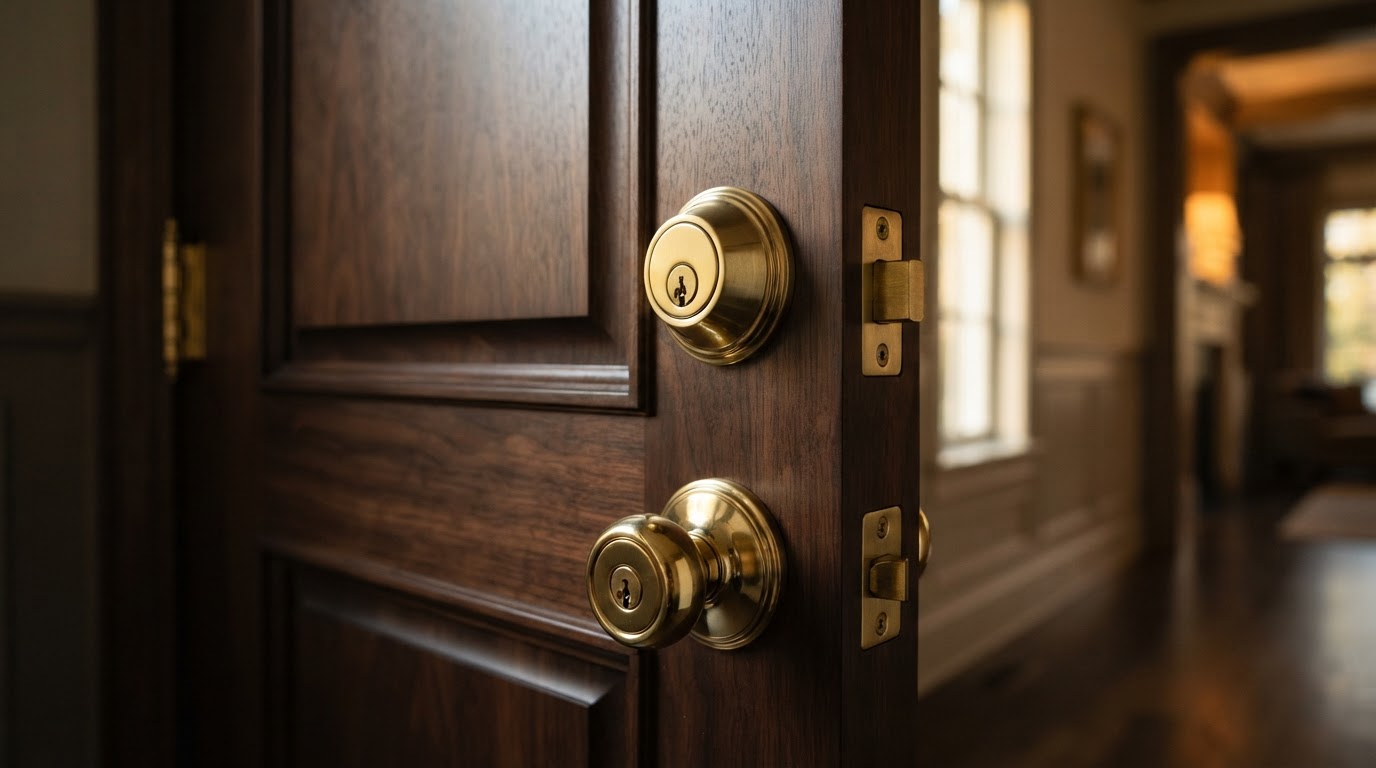
#### High-Security Deadbolts
These are enhanced versions of standard deadbolts with high-security features:
- Restricted keyway — Prevents unauthorized key duplication
- Hardened bolt — Resists sawing and cutting
- Anti-drill features — Hardened inserts in the cylinder
- Pick-resistant pins — Specialized pin designs
- Reinforced strike — Often includes a reinforced strike plate
High-security deadbolts are appropriate for residential and commercial exterior doors where enhanced security is desired.
#### High-Security Mortise Locks
Mortise locks are installed in a pocket (mortise) cut into the door. High-security mortise locks offer:
- Greater strength — The mortise body provides more metal and strength than cylindrical locks
- Multiple locking points — Some include both a latch and a deadbolt
- High-security cylinder — Restricted keyway and anti-attack features
- Commercial durability — Built for high-cycle commercial use
Mortise locks are common in commercial applications and high-end residential installations.
#### High-Security Cylinder Replacement
In some cases, a high-security cylinder can be installed in an existing lock body:
- Interchangeable cores — Some lock systems use interchangeable cores that can be swapped for high-security versions
- Mortise cylinders — High-security mortise cylinders can replace standard cylinders in mortise lock bodies
- Rim cylinders — High-security rim cylinders for rim cylinder locks
This allows upgrading security without replacing the entire lock body, though the lock body itself should be evaluated for compatibility and strength.
#### Medeco, Mul-T-Lock, and Other Brands
Several manufacturers specialize in high-security locks:
- Medeco — Known for pick and bump resistance with their biaxial key system
- Mul-T-Lock — Known for telescopic pin design and restricted keyways
- ASSA Abloy — Parent company of multiple high-security brands
- Schlage Primus — Restricted keyway system with sidebar
- Kaba — Known for electronic and mechanical high-security solutions
Each brand has unique features, keyway designs, and security approaches. A professional can help you understand the differences and choose the right system.
When to Consider High-Security Locks
High-security locks are an investment. They're appropriate when the security needs justify the cost:
#### Commercial Applications
- Businesses with valuable inventory — Retail, jewelry, electronics
- Office buildings — Where key control is essential
- Medical facilities — Where controlled access to medications and records is required
- Financial institutions — Where security is paramount
- Government facilities — Where security standards are mandated
- Multi-tenant buildings — Where many people need different access levels
#### Residential Applications
- High-value homes — Where the contents or property value justify enhanced security
- Homes with security concerns — Previous break-ins, neighborhood crime
- Vacation properties — Where the property is unoccupied for extended periods
- Homes with many key holders — Extended family, staff, service providers
- Luxury condominiums — Where building rules permit high-security hardware
#### Situations Where Key Control Is Critical
- Rental properties — Where tenants change and key control is essential
- Commercial tenant spaces — Where multiple tenants share a building
- Properties with service access — Where contractors or service providers need temporary access
- Properties with employee turnover — Where key recovery is difficult to enforce
Benefits of High-Security Locks
#### Key Control
The most significant benefit of high-security locks is key control. With restricted keyways:
- No unauthorized duplication — Keys cannot be copied at hardware stores
- Authorization required — Only authorized individuals can request key duplication
- Records maintained — Authorized dealers maintain records of key duplication
- Lost key management — If a key is lost, you know exactly how many copies exist and who has them
#### Enhanced Physical Security
High-security locks provide better resistance to:
- Picking — Specialized pin designs resist picking techniques
- Drilling — Hardened components resist drilling attacks
- Bumping — Keyway and pin designs resist bump keys
- Forced entry — Stronger construction resists prying, twisting, and cutting
#### Durability
High-security locks are typically built to higher standards:
- Better materials — Solid metal construction throughout
- Higher cycle ratings — Tested for more operating cycles
- Commercial-grade components — Designed for heavy use
- Longer service life — With proper maintenance, high-security locks last longer
#### Insurance Benefits
Some insurance policies offer benefits for high-security locks:
- Reduced premiums — Some insurers offer discounts for high-security hardware
- Claim requirements — Some policies require high-security locks for coverage
- Documentation — High-security lock installation can be documented for insurance purposes
Check with your insurance provider to understand any benefits or requirements.
Considerations Before Installing High-Security Locks
#### Cost
High-security locks cost more than standard locks:
- Hardware cost — The locks themselves are more expensive
- Key cost — Restricted key blanks cost more to duplicate
- Installation — Professional installation is recommended
- System setup — If setting up a master key system, design costs apply
The investment should be justified by the security needs of the property.
#### Key Management
High-security locks require more formal key management:
- Authorized dealer relationship — You need a relationship with an authorized dealer for key duplication
- Record keeping — Maintain records of who has keys
- Key return policies — Implement policies for key return when access is no longer needed
- Lost key procedures — Have procedures for handling lost keys (may require rekeying)
#### Compatibility
- Door preparation — High-security locks may require different door preparations
- Existing hardware — Some high-security cylinders can retrofit existing lock bodies; others require full replacement
- Master key systems — If part of a master key system, the high-security lock must be compatible
#### User Education
Users of high-security locks should understand:
- Key duplication restrictions — Keys cannot be copied at standard key cutters
- Where to get duplicate keys — The authorized dealer location
- Key handling — Don't lend keys to unauthorized individuals
- Lost key procedures — What to do if a key is lost
The Assessment Process
When considering high-security locks, a professional assessment includes:
#### 1. Security Needs Assessment
- Property type and use — Residential, commercial, or mixed
- Contents and risk — What is being protected and the risk level
- Current security — What hardware is currently installed
- Key control needs — How many key holders, turnover rate, key management practices
#### 2. Door and Hardware Assessment
- Door condition — Doors must be strong enough to match the lock's security
- Frame condition — Frames must be reinforced to match the lock
- Current hardware — What can be retained, what needs replacement
- Compatibility — Whether high-security cylinders can retrofit existing hardware
#### 3. System Design
- Lock selection — Which high-security locks are appropriate
- Key system design — Master key system if needed
- Key quantity — How many keys are needed initially
- Future expansion — Planning for additional locks or key holders
#### 4. Proposal and Approval
A detailed proposal with scope and pricing is presented for approval before any work begins.
#### 5. Installation
Professional installation includes:
- Hardware installation — Installing the high-security locks
- Key cutting — Cutting initial keys with the restricted keyway
- System documentation — Recording the key system for future reference
- Testing — Verifying all locks and keys operate correctly
- User education — Explaining key management to authorized users
Factors Affecting Cost
High-security lock costs vary based on:
- Lock type — Deadbolt, mortise, or cylinder
- Security level — Higher security features cost more
- Brand — Different brands have different price points
- Key system — Master keying adds cost
- Number of locks — More locks mean more hardware
- Key quantity — More keys mean more cutting
- Installation — Professional installation labor
- Door preparation — Modifications needed for installation
All costs are presented for approval before authorized work begins.
Conclusion
High-security locks provide meaningful benefits for properties where the security needs justify the investment. Key control, enhanced physical security, and durability are the primary advantages. A professional assessment helps determine whether high-security locks are appropriate for your situation and which system best meets your needs.
Contact D'Alembert Locksmith to discuss high-security lock options, current availability, and suitable service options.